Stargazing in the Abu Dhabi Desert: The Short Answer
Dune bashing, camel ride, falconry, BBQ dinner under the stars & live Bedouin shows. Hotel pickup included.
- How much does a stargazing safari cost?: Safaris start from AED 35; the overnight camping package (the best for stargazing) is quoted on request for your group.
- What time does the desert safari start and finish?: Pickup is usually 3:00 to 3:30 PM and you are back in the city around 10:00 to 10:30 PM. Timings follow sunset, so in December pickup moves earlier and in June it moves later.
- Where is the best place to stargaze in Abu Dhabi?: The desert, away from city lights. The Al Khatim dunes (great for an overnight camp) and the remote Al Quaa Milky Way spot in the Al Dhafra region are the best-known dark-sky locations.
- What is included in the Abu Dhabi desert safari?: Every evening package includes 4×4 dune bashing, a short camel ride, sandboarding, a sunset photo stop, Arabic costume for photos, henna for ladies, a full BBQ buffet dinner with vegetarian and non-vegetarian options, unlimited soft drinks, water, Arabic coffee and tea, a shisha corner, separate washrooms and around eight live shows including tanoura, belly dance and a fire show.
- How do I book?: Message us on WhatsApp with your date and group size. We reply with the exact total, no deposit and no booking fee, and you pay at the camp on the day.
- What is the best time of year for stargazing?: October to March offers the clearest, most comfortable nights. For the darkest skies, choose a date close to the new moon.
Abu Dhabi Desert Safari Packages — Book Direct, Best Price Guaranteed
All packages depart from our own DCT-licensed Abu Dhabi camp. Instant confirmation on WhatsApp, no middleman, pay on the day. No hidden fees.
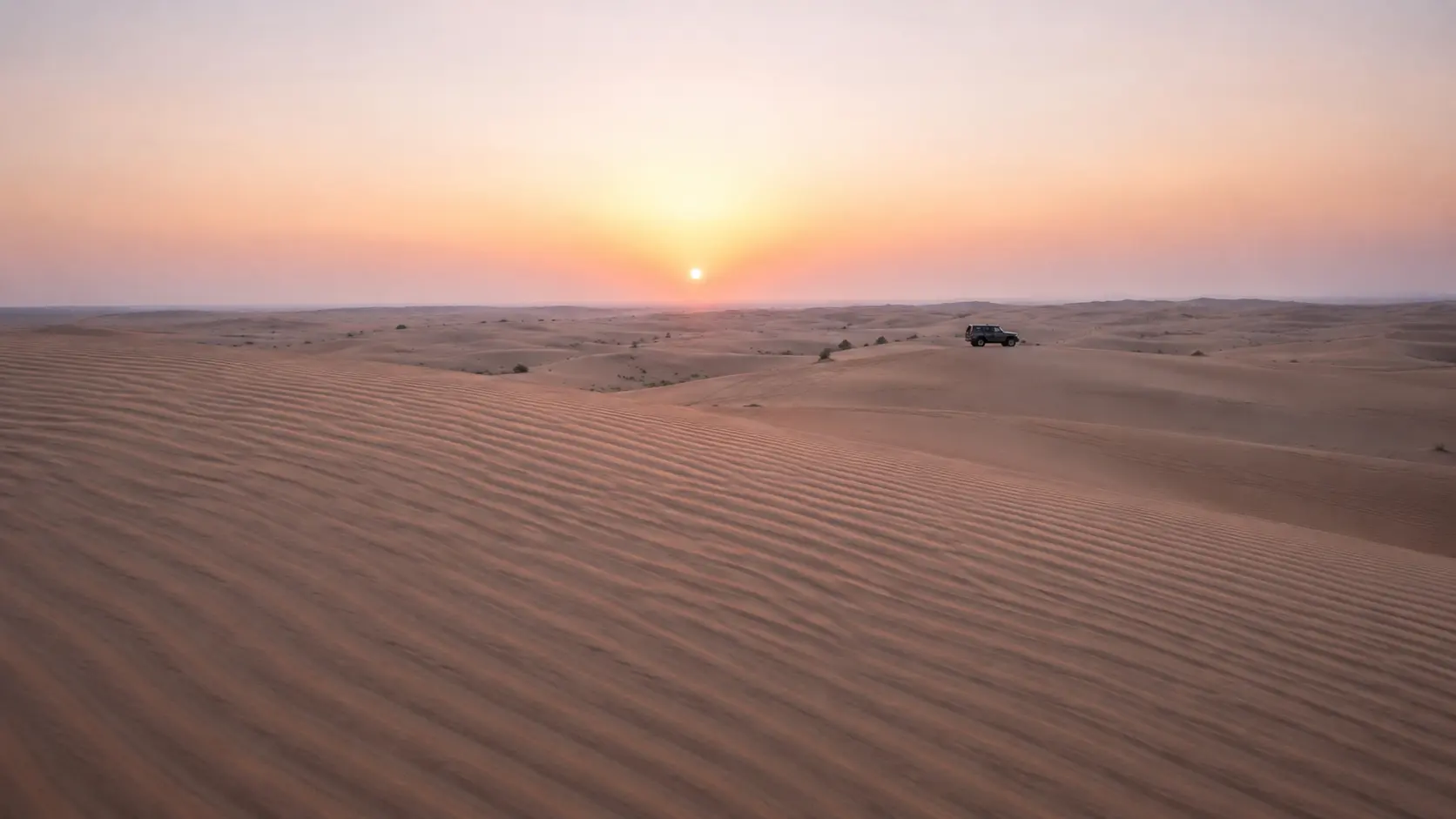 AED 35 per person
Self-Drive Desert Safari
Drive yourself to our Dubai camp — most affordable option
- Drive to Al Khatim Camp (GPS link provided)
- Dune Bashing in 4×4 at Camp
- Sandboarding & Camel Ride
- Arabic Costume & 360° Photo Point
- Henna Painting for Ladies
- BBQ Buffet Dinner (Veg & Non-Veg)
- Tanoura, Belly Dance & Fire Show
- Soft Drinks, Water, Tea & Coffee
- Duration: 6–7 Hours
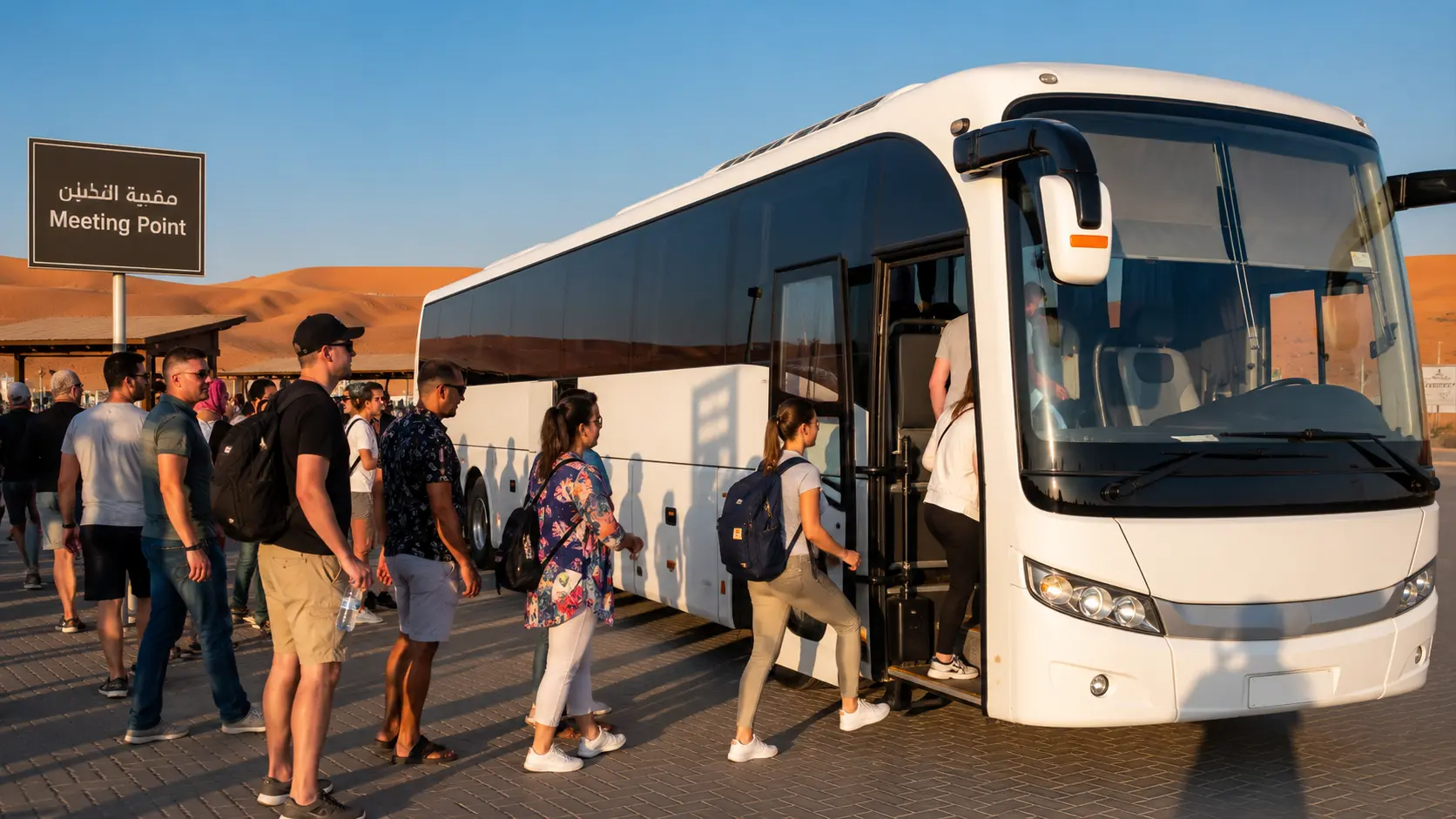 AED 50 per person
Shared Bus Transfer
Shared bus from a central Abu Dhabi pickup point — budget group travel
- Pickup from Central Abu Dhabi Meeting Point
- Comfortable Air-Conditioned Bus
- Dune Bashing in 4×4 vehicle
- Sandboarding & Camel Ride
- Arabic Costume & 360° Photo Point
- Henna Painting for Ladies
- BBQ Buffet Dinner (Veg & Non-Veg)
- Tanoura, Belly Dance & Fire Show
- Soft Drinks, Water, Tea & Coffee
- Duration: 6–7 Hours
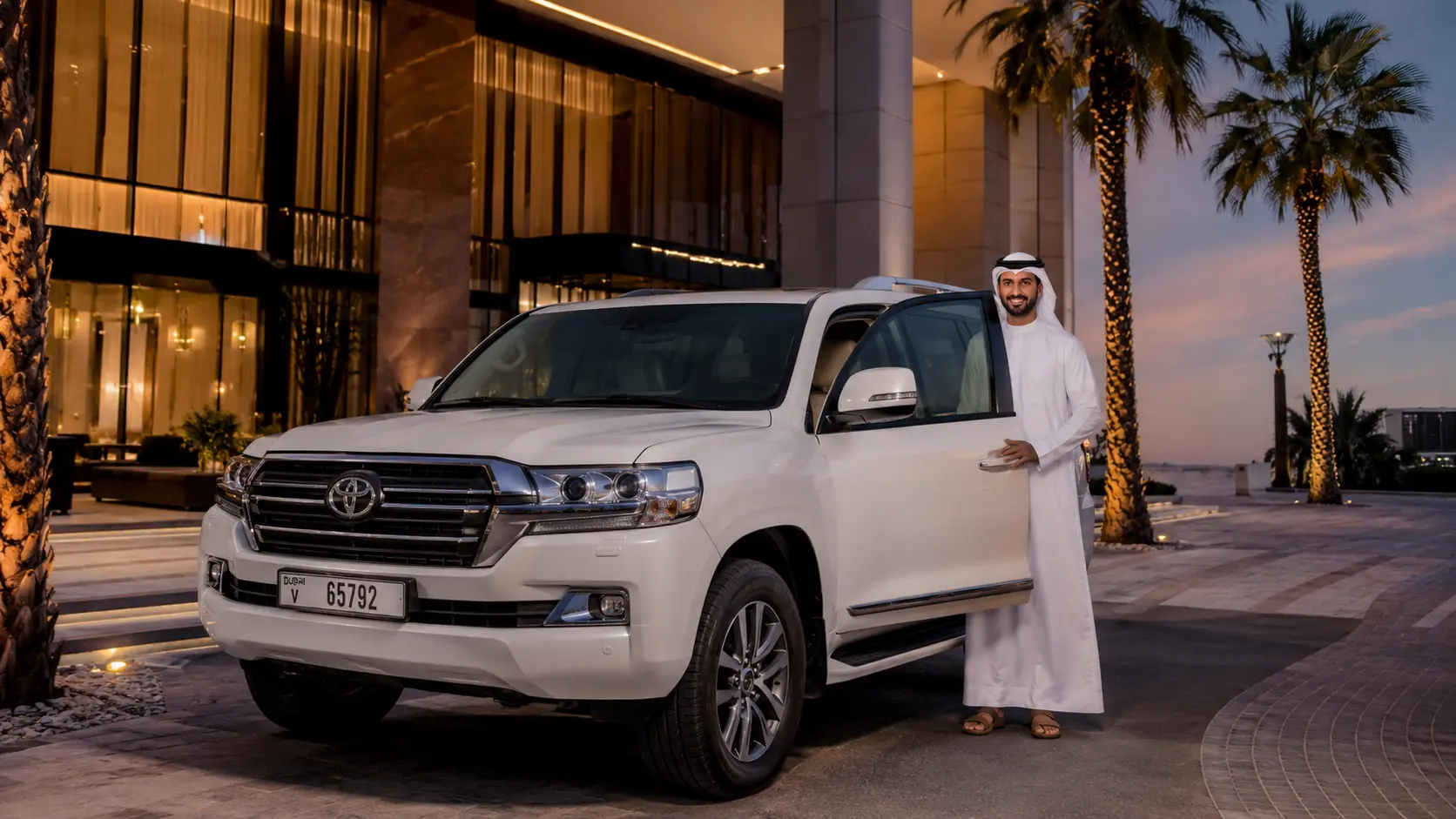 AED 100 per person
Sharing Home Pickup
Shared AC 4×4 pickup from your Abu Dhabi hotel or residence
- Pickup from Your Hotel / Residence
- Shared Air-Conditioned 4×4 Vehicle
- Dune Bashing in 4×4 vehicle
- Sandboarding & Camel Ride
- Arabic Costume & 360° Photo Point
- Henna Painting for Ladies
- BBQ Buffet Dinner (Veg & Non-Veg)
- Tanoura, Belly Dance & Fire Show
- Soft Drinks, Water, Tea & Coffee
- Drop-off at Your Location
- Duration: 6–7 Hours
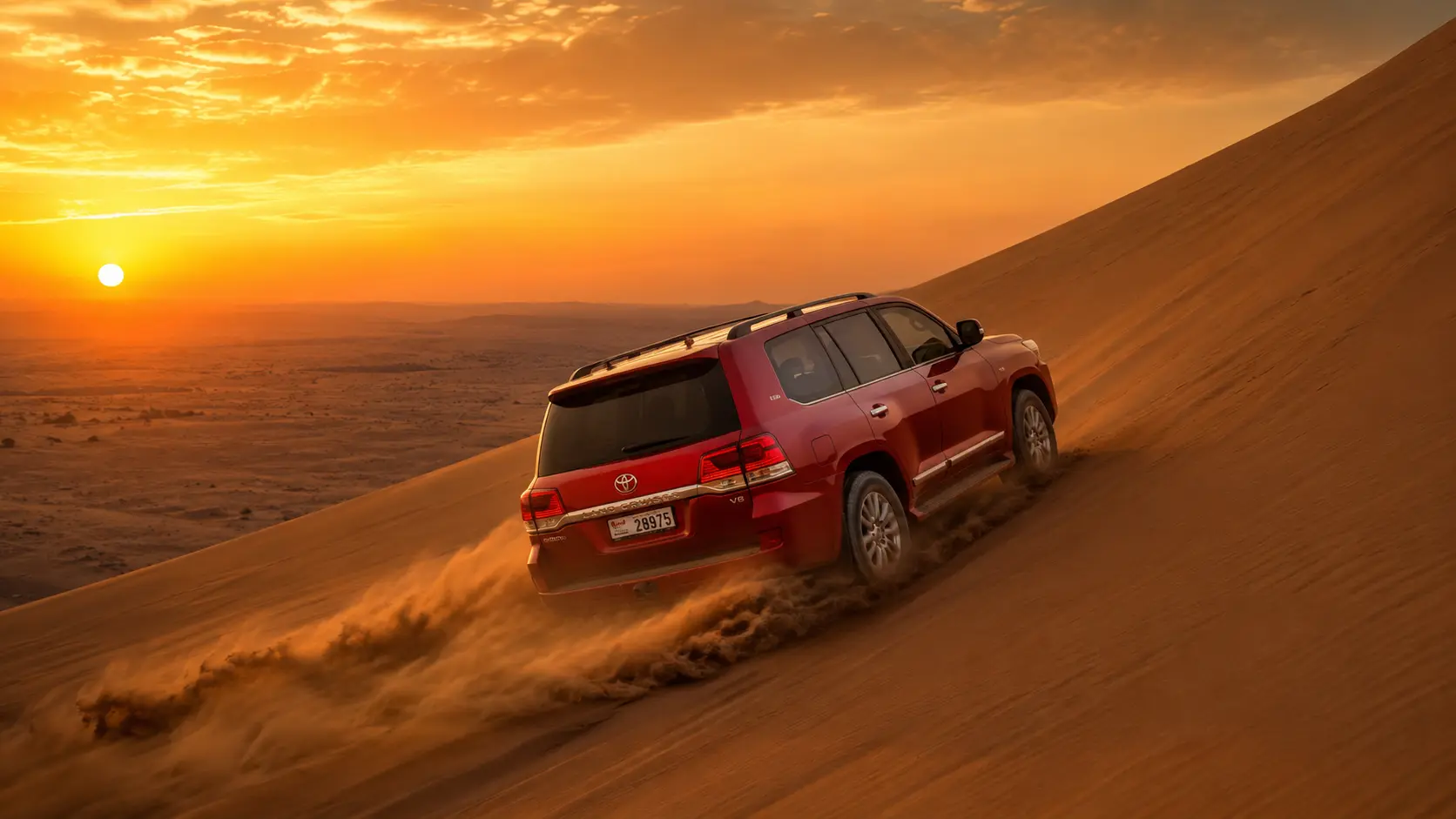 AED 599 per car
Private Car Desert Safari
Exclusive 7-seater 4×4 vehicle for your group only
- Private Hotel / Residence Pickup
- Exclusive 7-Seater 4×4 vehicle
- Your Group Only — No Strangers
- Dune Bashing & Sandboarding
- Camel Ride & 360° Photo Point
- Arabic Costume & Henna for Ladies
- BBQ Buffet Dinner (Veg & Non-Veg)
- Tanoura, Belly Dance & Fire Show
- Soft Drinks, Water, Tea & Coffee
- Private Drop-off Included
- Duration: 6–7 Hours
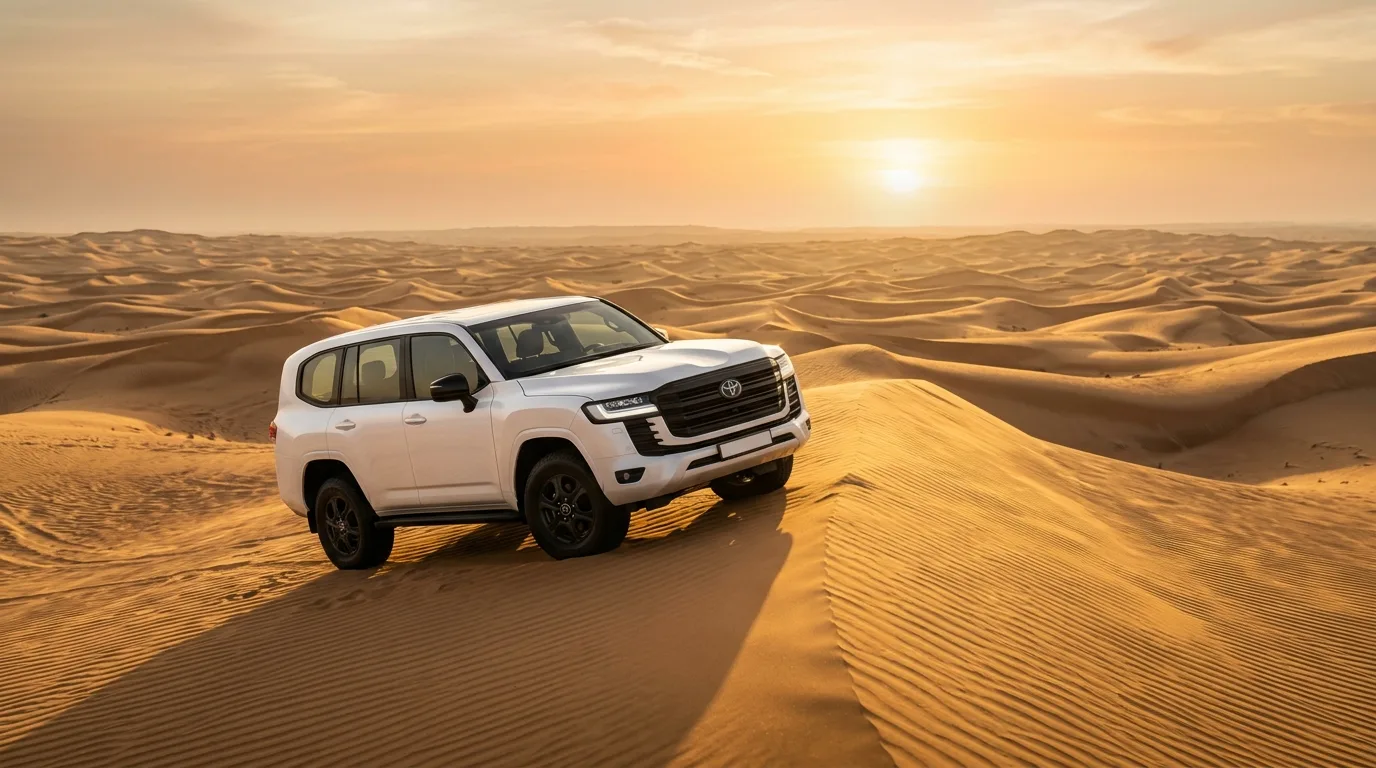 AED 800 per car
Private Land Cruiser Safari
Private Land Cruiser pick & drop with all standard activities
- Private Land Cruiser Pick & Drop
- Exclusive Premium 4×4 Vehicle
- Your Group Only — No Strangers
- Dune Bashing & Sandboarding
- Camel Ride & 360° Photo Point
- Arabic Costume & Henna for Ladies
- BBQ Buffet Dinner (Veg & Non-Veg)
- Tanoura, Belly Dance & Fire Show
- Soft Drinks, Water, Tea & Coffee
- Private Drop-off Included
- Duration: 6-7 Hours
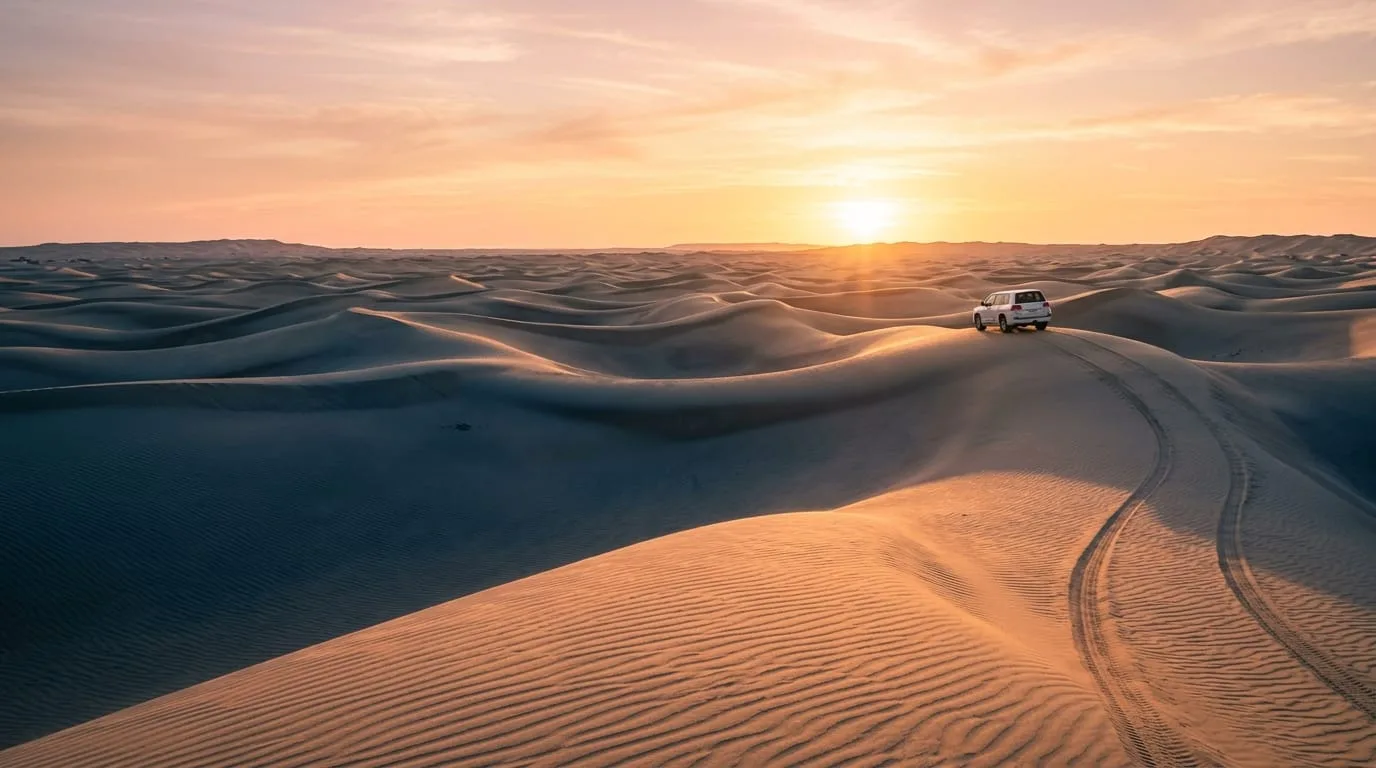 AED 799 per car
Morning Desert Safari
Cooler private morning adventure with hotel pickup — perfect for families & photographers
- Private Hotel / Residence Pickup
- 4×4 Red Dune Bashing (45 min)
- Camel Ride & 360° Photo Point
- Sandboarding on Golden Dunes
- Quad Bike Option (add-on)
- Tea, Coffee, Water & Light Snacks
- Arabic Costume & Photo Stop
- Cooler Morning Temperatures
- Your Group Only — No Strangers
- Duration: 3–4 Hours
Add-Ons & Extras
Customise your safari — add any of these to your chosen package.
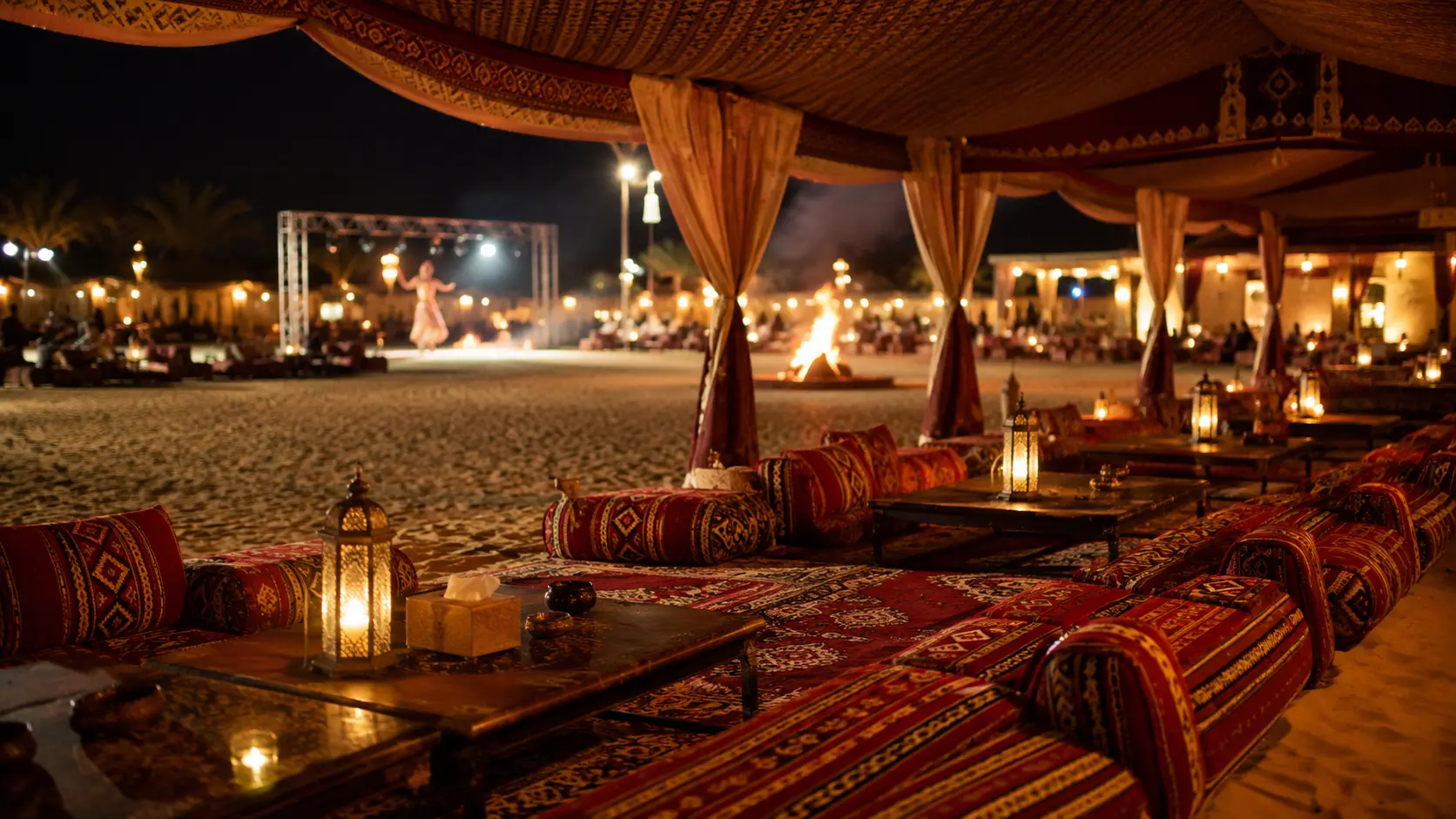 +AED 50 per person
VIP Sitting Area Upgrade
Add VIP access to any package — premium camp seating
AED 50
- Dedicated VIP Section at Camp
- Premium Cushioned Seating
- Best View of the Stage
- Priority Dinner Service
- Add to Any Package
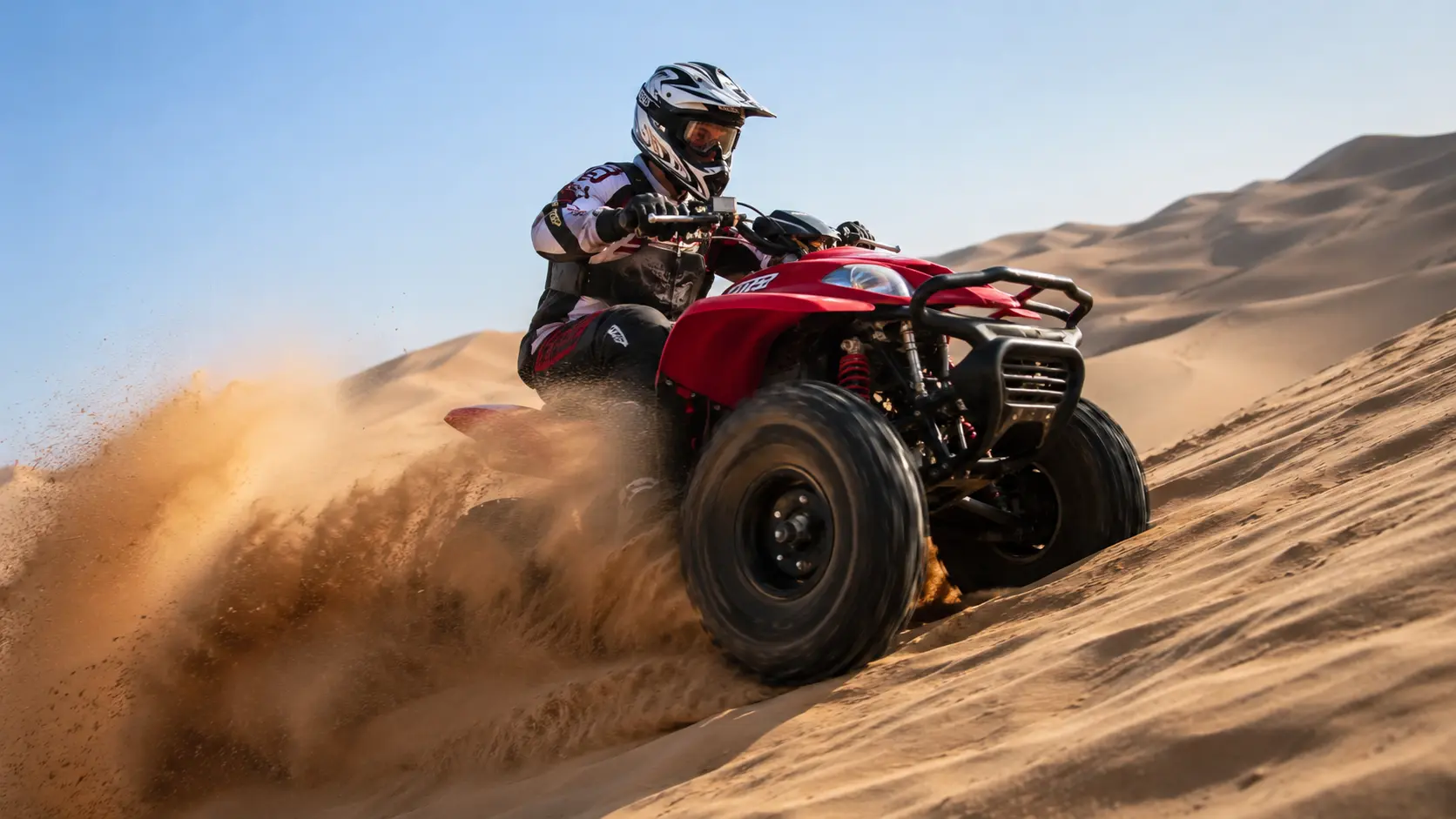 From AED 100
Quad Biking
Single seater AED 100 — Double seater AED 150 (pre-booked)
AED 100 single · AED 150 double
- Single & Double Seater Available
- Safety Helmet & Gear Provided
- Full Safety Briefing
- Supervised Desert Riding
- Available at Camp During Safari
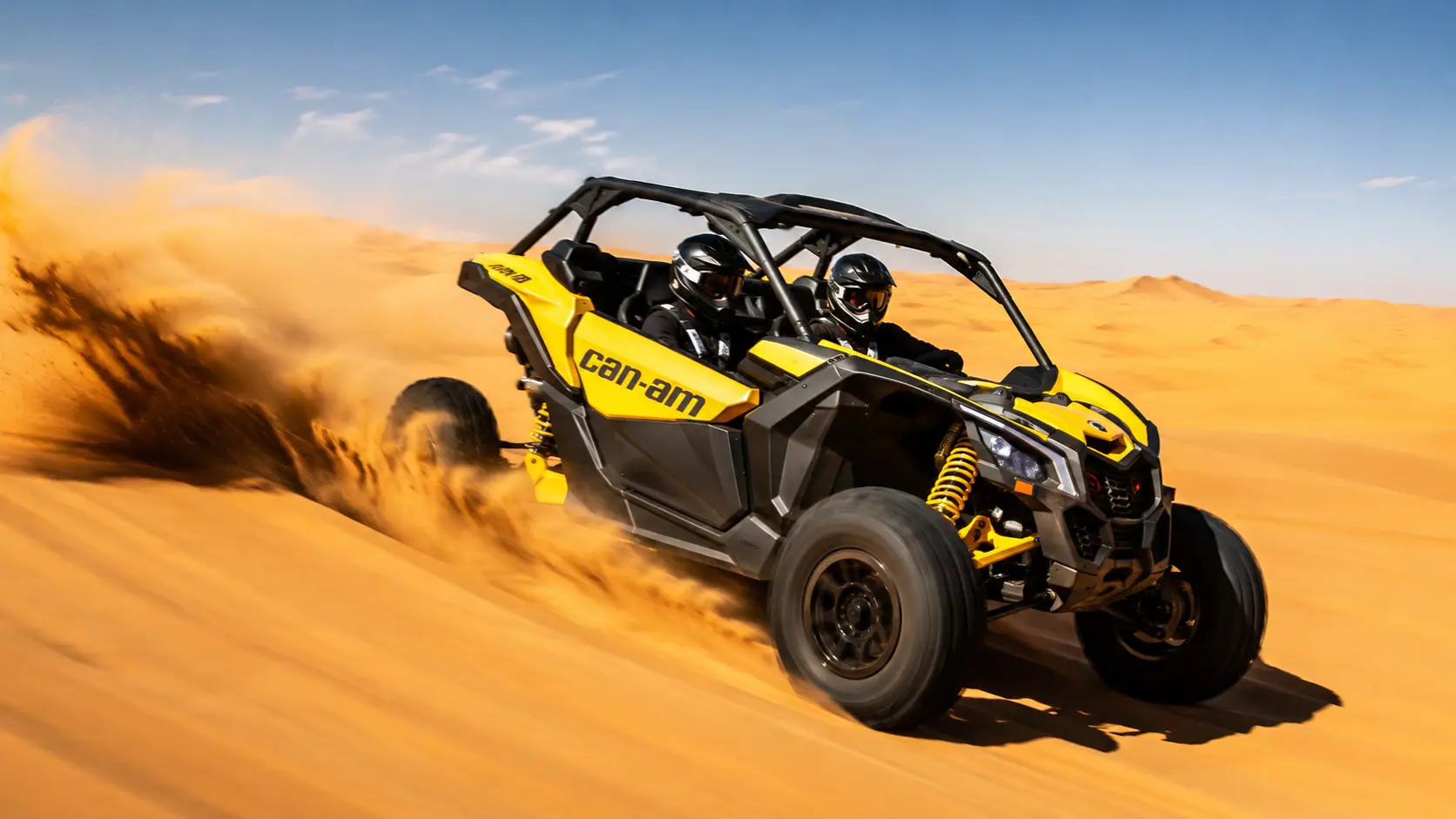 AED 800 / 30 min · 2h min
Dune Buggy Safari
High-speed side-by-side buggy — 30 minutes of pure desert thrill
- Powerful Side-by-Side Buggy
- Safety Harness & Helmet Provided
- Expert Desert Guide Escort
- High-Speed Dune Riding
- Maximum 2 Persons per Buggy
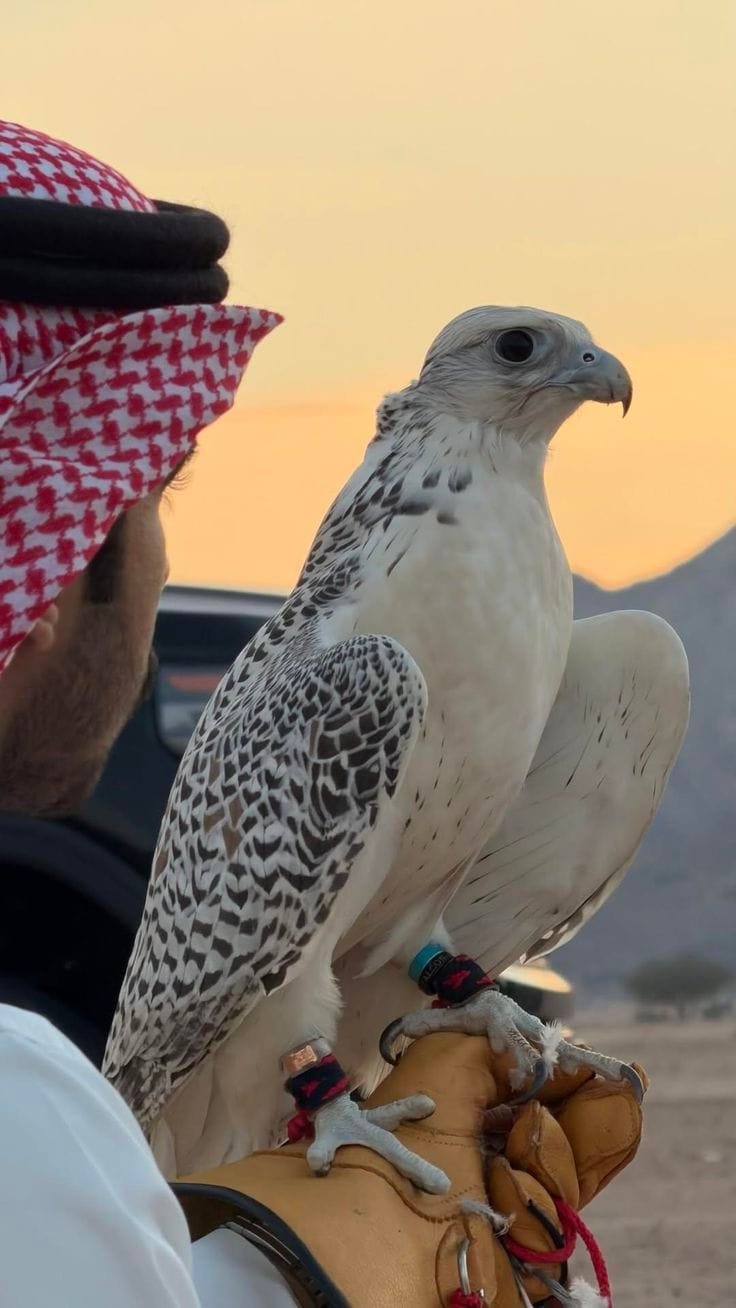 AED 30 per person
Falcon Photo Experience
Hold a real Arabian falcon and capture the moment
AED 30
- Real Arabian Falcon Photo
- Authentic Desert Heritage
- Great for Social Media
- Available at Camp
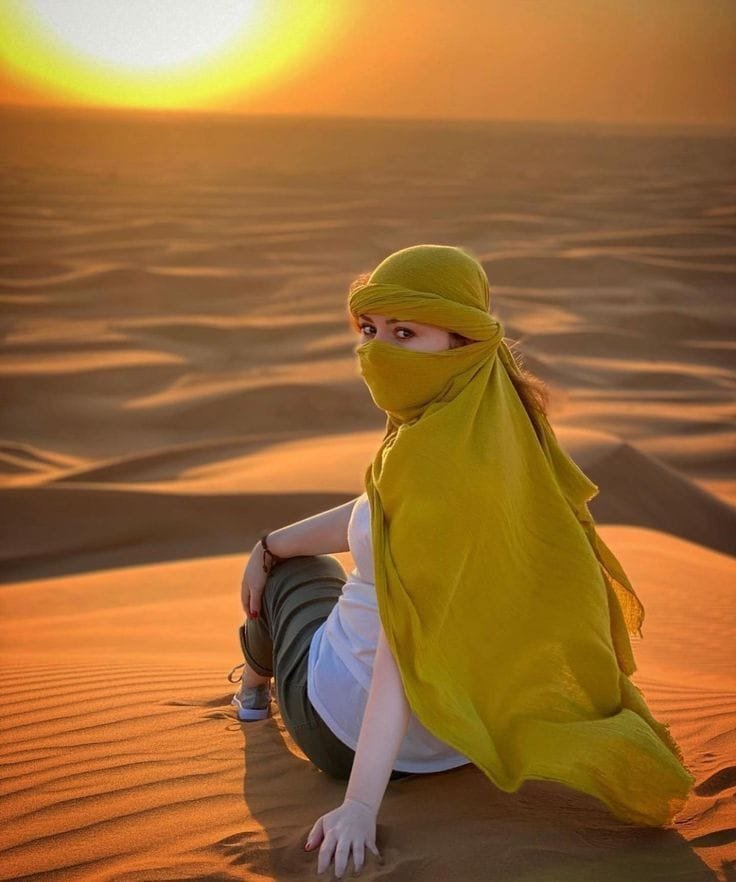 AED 50–150
Professional Photography
A pro photographer captures your desert moments
AED 50–150
- Professional Photographer
- Edited High-Resolution Photos
- Sunset & Dune Shots
- Packages from AED 50
Stargazing in Abu Dhabi — Quick Answer
The best stargazing in Abu Dhabi is in the desert, far from city lights — on an overnight safari in the Al Khatim dunes, or at famous dark-sky spots like Al Quaa (Al Qua’a) in the Al Dhafra region, known for its brilliant Milky Way views. On a clear, moonless night away from the city you can see thousands of stars, planets, shooting stars and, in season, the glowing band of the Milky Way overhead. The best months are the clear winter nights of October to March, and the darkest skies are near the new moon.
Where to Go Stargazing in Abu Dhabi
The single biggest factor in great stargazing is darkness — and Abu Dhabi’s deserts offer some of the most accessible dark skies in the UAE.
City lights drown out all but the brightest stars, so real stargazing means heading into the desert. The further you get from the glow of Abu Dhabi and Dubai, the more the sky opens up. Two locations stand out for stargazers: our own base in the Al Khatim dunes (about 45 minutes from the city, perfect for an overnight camp), and the legendary Al Quaa Milky Way spot deep in the Al Dhafra region, one of the darkest and most famous stargazing sites in the Emirates.
The Al Khatim dunes — accessible dark skies
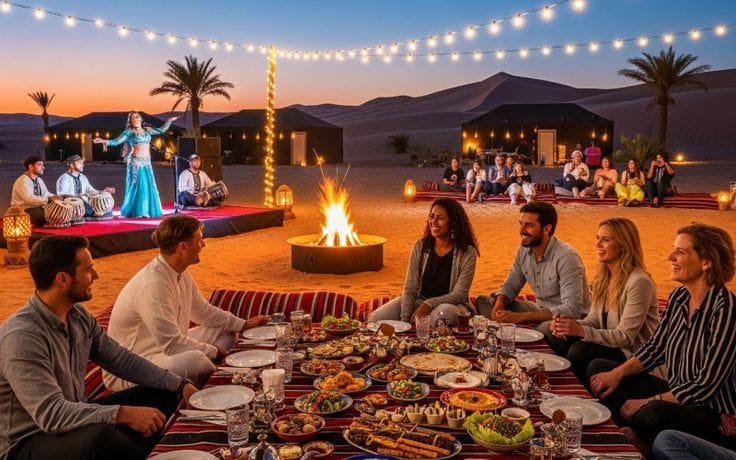
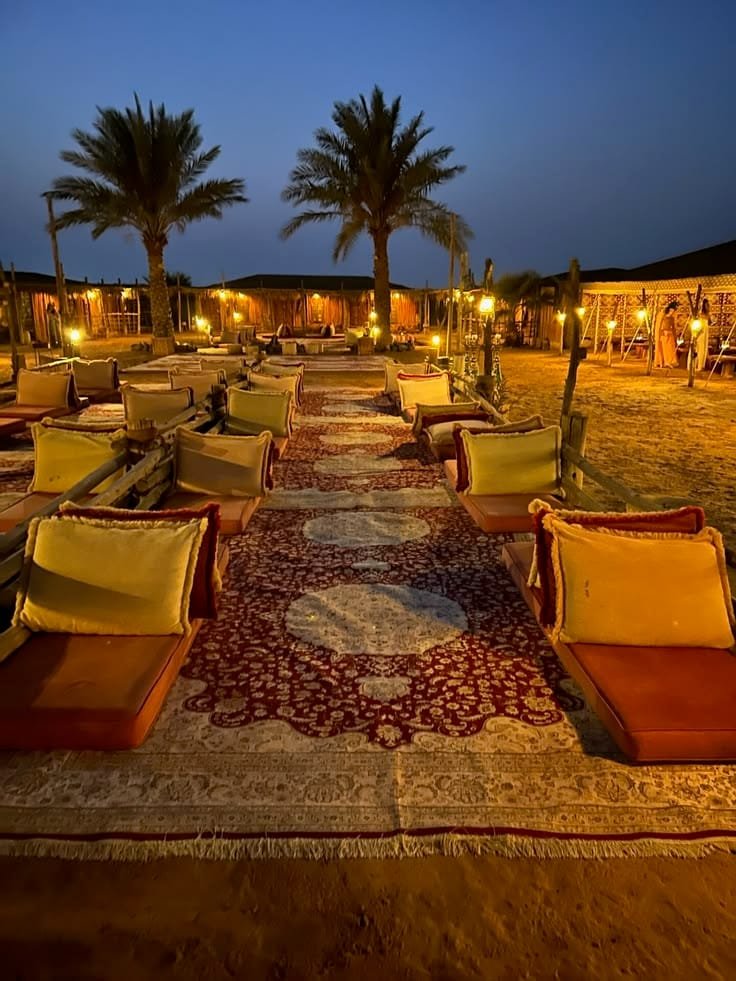
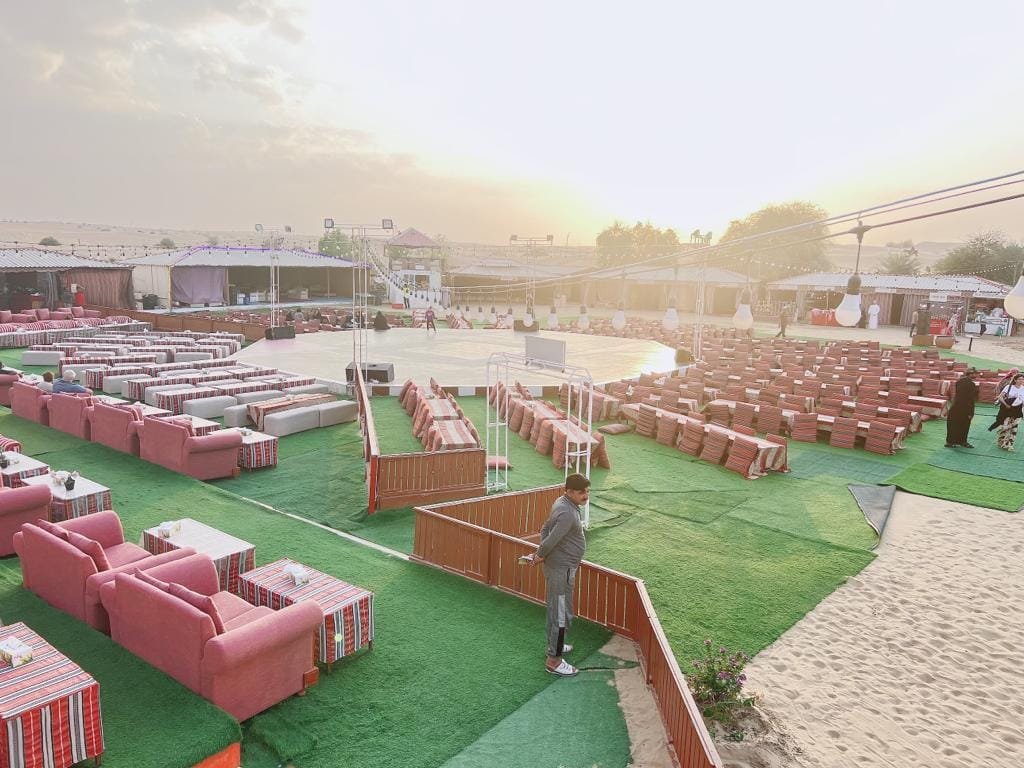
On an overnight desert safari in the Al Khatim dunes, you’re far enough from the city that the sky fills with stars once the day-tour groups leave. It’s the easiest way to combine stargazing with a full desert experience — dune bashing, dinner, a campfire and a night under the stars — without a long expedition.
Al Quaa (Al Qua’a) — the Milky Way spot
For the very darkest skies, the Al Quaa area near Liwa and the Al Dhafra desert is renowned among astro-photographers for its spectacular Milky Way. It’s remote — a longer drive from the city — but the reward is a sky almost untouched by light pollution. We can arrange deep-desert stargazing trips toward this region for serious sky-watchers.
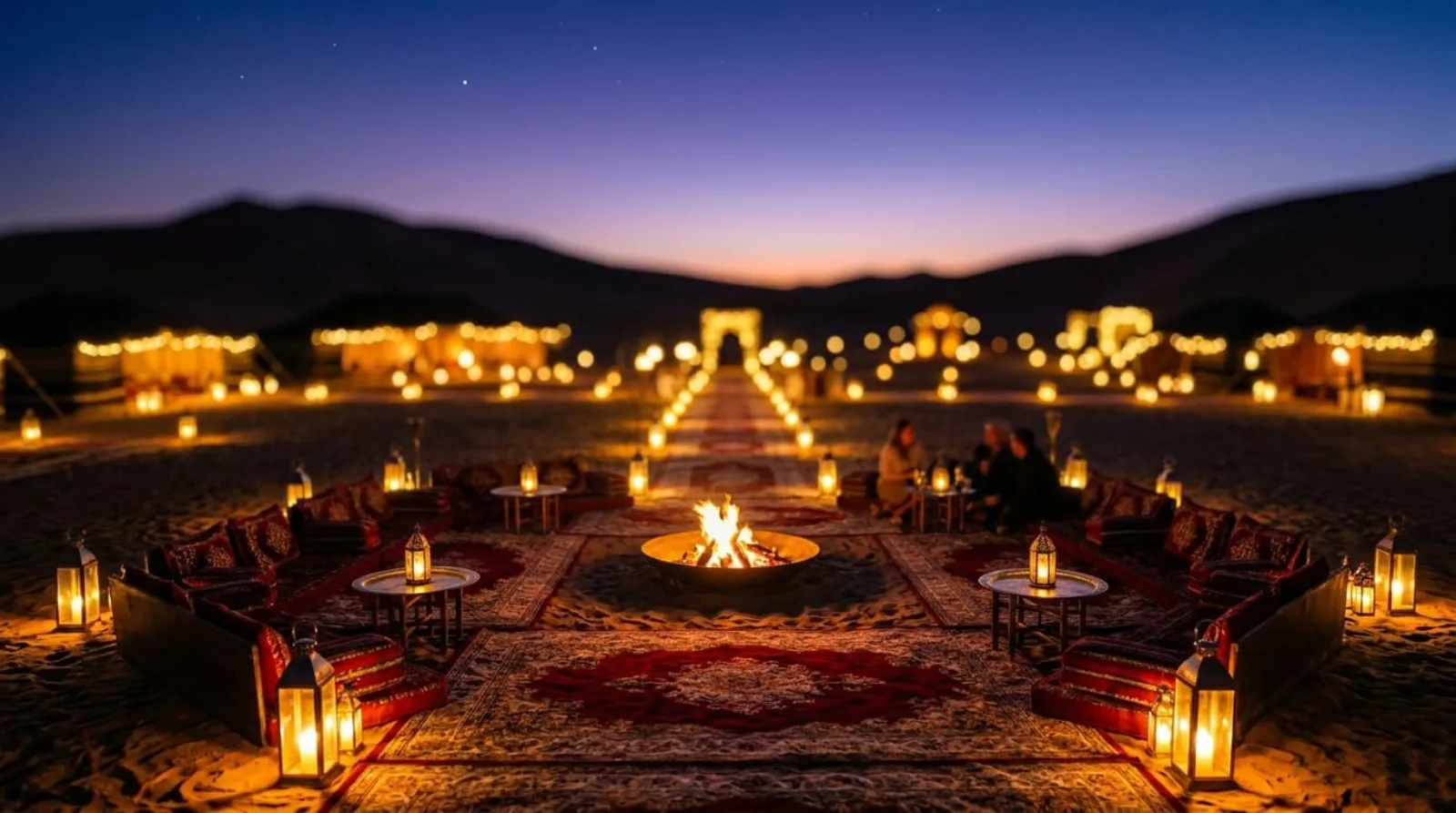
Where the Milky Way comes out
Once the city glow is behind you and the day groups have gone, the Al Khatim sky transforms — thousands of stars, bright planets and, in season, the Milky Way arching overhead. It’s a view that stops people in their tracks.
A Sky Full of Stars
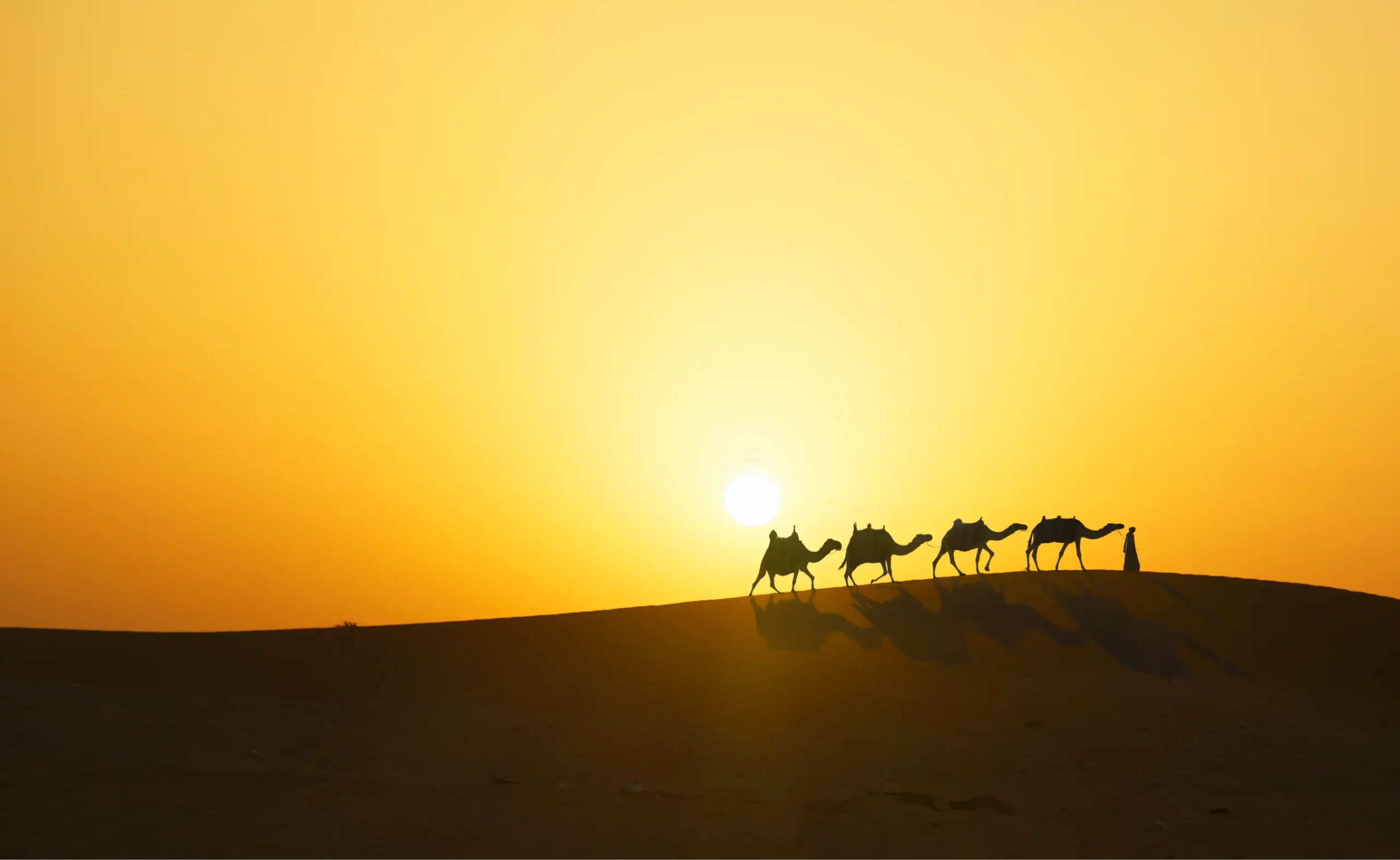
Away from the city glow, the Al Khatim desert reveals a sky most visitors have never seen.
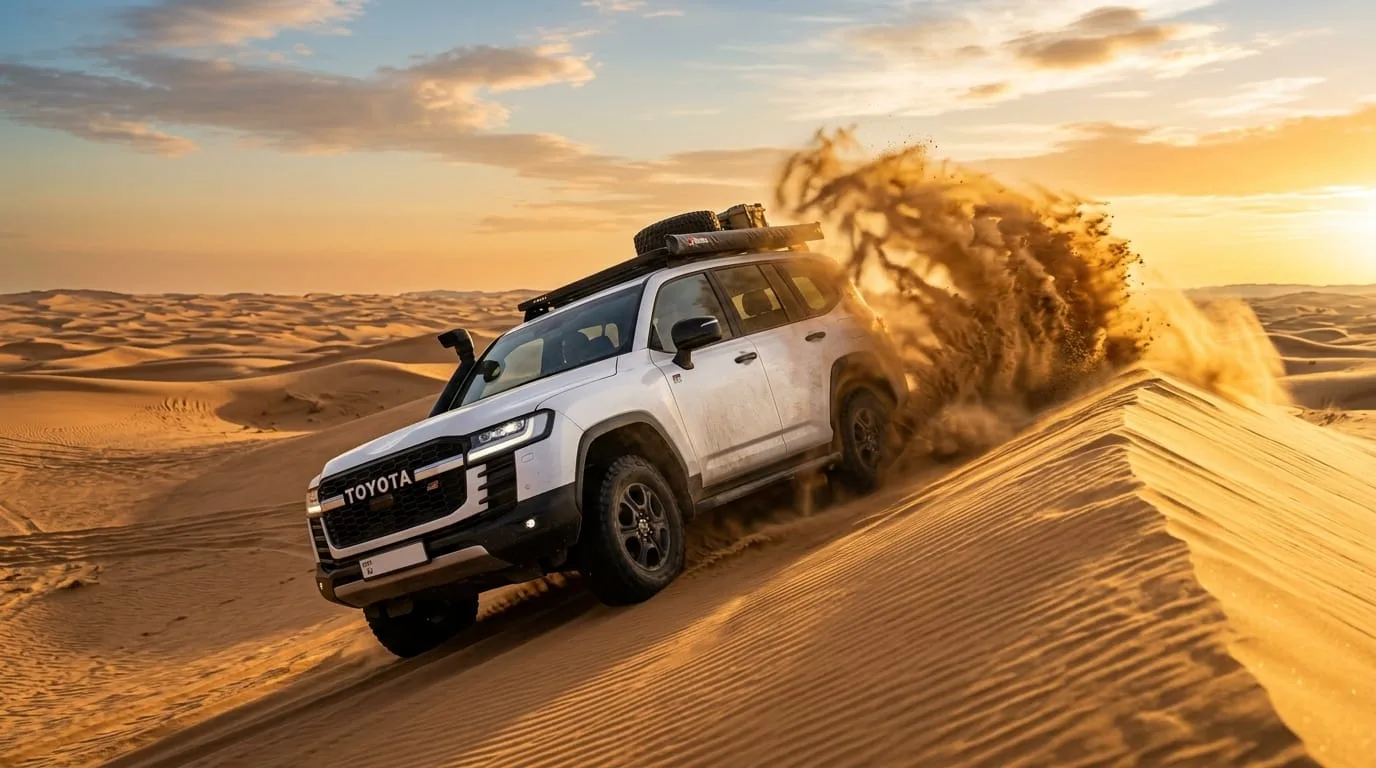
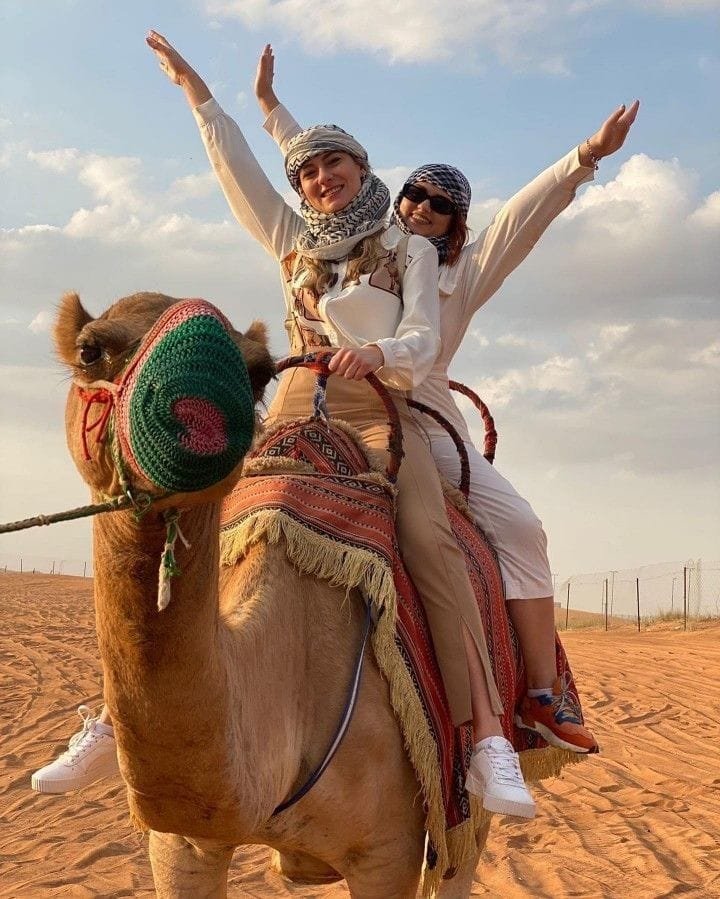
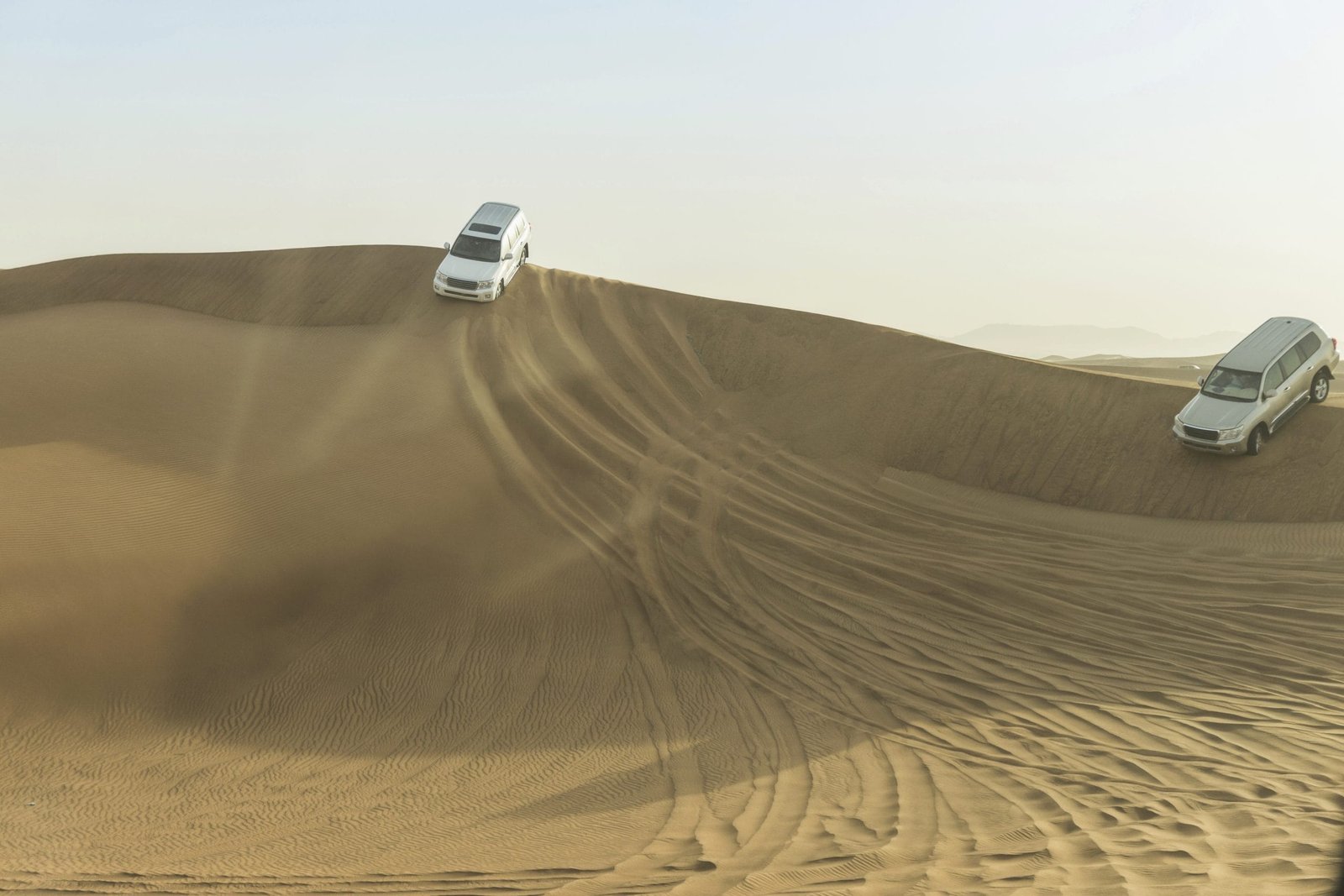
What Can You See in the Abu Dhabi Night Sky?
On a clear, dark night in the desert, the sky reveals far more than most people ever see from a city.
- The Milky Way — the glowing band of our galaxy, visible to the naked eye on clear, moonless nights, especially from late winter into spring and summer when the bright galactic core rises.
- Planets — Venus, Jupiter, Saturn and Mars are often bright and easy to spot, and steady enough to enjoy through a telescope.
- Constellations — Orion, the Big Dipper, Scorpius and many more, which a guide can help you trace.
- Shooting stars — common on any clear night, and spectacular during meteor showers.
- Satellites & the ISS — bright points gliding steadily across the sky after dark.
When Is the Best Time to Stargaze in Abu Dhabi?
The best stargazing is on clear, moonless winter nights — roughly October to March — with the darkest skies near the new moon.
Two things matter most: how clear and dry the air is, and how much moonlight there is. Winter delivers the clearest, most comfortable nights, while a new-moon window gives the darkest skies for seeing the faintest stars and the Milky Way. A bright full moon, by contrast, washes out all but the brightest stars.
| Factor | Best for stargazing |
|---|---|
| Season | October–March (clear, cool, dry nights) |
| Moon phase | New moon (darkest skies) |
| Milky Way core | Late winter through spring/summer, after midnight |
| Time of night | After ~9–10 PM, once fully dark |
| Weather | Clear, cloud-free, low humidity |
Tell us if stargazing is your priority and we’ll suggest dates around the new moon and clear-sky forecasts for the best possible experience.
How to Experience Stargazing in the Desert
The best way to stargaze in Abu Dhabi is on a desert safari that keeps you in the dunes after dark. Here are your options.
Overnight Safari
The ultimate choice — camp in the Al Khatim dunes, watch the stars come out after the crowds leave, and fall asleep under the Milky Way. Wake for a desert sunrise.
Evening Safari
Even a standard evening safari includes time under the stars before the drive home — a lovely taste of the desert night sky.
Private Stargazing
A private tour lets us position you away from camp light, time the trip around the new moon, and even arrange a telescope for a dedicated night of sky-watching.
Deep-Desert Trip
For the darkest skies and serious astro-photography, we can arrange trips toward the famous Al Quaa Milky Way region.
Photographing the Milky Way in the Desert
Abu Dhabi’s dark desert skies are a dream for astro-photography — and the Al Khatim dunes make a stunning foreground.
Capturing the Milky Way is easier than many people think, but it needs the right conditions and a little kit. Choose a night close to the new moon for the darkest sky, and shoot when the galactic core is up (best from late winter into summer, after midnight). The sculpted dunes give you a dramatic foreground that turns a star photo into a landscape.
Astro-photography tips
- Bring a tripod — essential for the long exposures stars require.
- Use a fast wide lens — f/2.8 or wider captures more light and sky.
- Try 15–25 seconds at ISO 3200–6400 — a good starting point for the Milky Way.
- Shoot near the new moon — moonlight washes out the stars.
- Include a dune or camel — a foreground gives the shot scale and drama.
- Let your eyes adjust — 20 minutes in the dark and you’ll see far more.
What to Bring for a Night of Stargazing
| Item | Why |
|---|---|
| Warm layers & a jacket | Desert nights get cold, especially in winter (8–12°C) |
| A red torch | Preserves your night vision far better than a white light |
| Camera + tripod | For Milky Way and star-trail photography |
| A star app | To identify planets, constellations and satellites |
| Binoculars (optional) | Reveal star clusters, the moon’s craters and more |
| A blanket or mat | For lying back and taking in the whole sky |
Why Stargaze With Royal Arabian Safari
- Genuinely dark skies — our own Al Khatim base, far from the city glow, with deep-desert trips available.
- Overnight camps — the only way to enjoy the sky through the darkest, best hours.
- Timed around the moon — we’ll suggest new-moon dates for the darkest skies.
- Photographer-friendly — tents positioned away from light, clean horizons, telescope on request.
- Full desert experience — stargazing plus dune bashing, dinner and a sunrise, 4.9-star rated.
Stargazing Abu Dhabi — FAQ
Where is the best place to stargaze in Abu Dhabi?
The desert, away from city lights. The Al Khatim dunes (great for an overnight camp) and the remote Al Quaa Milky Way spot in the Al Dhafra region are the best-known dark-sky locations.
Can you see the Milky Way in Abu Dhabi?
Yes — on a clear, moonless night in the desert, far from city lights, the Milky Way is visible to the naked eye. The bright galactic core is best from late winter through spring and summer, after midnight.
What is the best time of year for stargazing?
October to March offers the clearest, most comfortable nights. For the darkest skies, choose a date close to the new moon.
What can you see stargazing in the desert?
Thousands of stars, the Milky Way, bright planets (Venus, Jupiter, Saturn, Mars), constellations, shooting stars and satellites. Meteor showers like the Geminids (December) and Perseids (August) are spectacular.
How do I go stargazing in the Abu Dhabi desert?
The best way is an overnight desert safari, which keeps you in the dunes through the night. Evening safaris include some stargazing, and private trips can be timed around the new moon.
What is the Al Quaa Milky Way spot?
Al Quaa (Al Qua’a) is a remote area in Abu Dhabi’s Al Dhafra region, famous among astro-photographers for its exceptionally dark skies and brilliant Milky Way views.
Do I need a telescope?
No — the naked eye reveals thousands of stars and the Milky Way. Binoculars or a telescope add detail, and we can arrange a telescope for private trips.
Is it cold in the desert at night?
Yes, especially in winter, when temperatures can drop to 8–12°C. Bring warm layers; on overnight safaris we provide blankets and sleeping bags.
Can I photograph the Milky Way?
Absolutely. Bring a tripod and a fast wide lens, shoot near the new moon, and use the dunes as a foreground. Tell us and we’ll set you up for the best shot.
How much does a stargazing safari cost?
Safaris start from AED 35; the overnight camping package (the best for stargazing) is quoted on request for your group. Message us for details.
What is included in the Abu Dhabi desert safari?
Every evening package includes 4×4 dune bashing, a short camel ride, sandboarding, a sunset photo stop, Arabic costume for photos, henna for ladies, a full BBQ buffet dinner with vegetarian and non-vegetarian options, unlimited soft drinks, water, Arabic coffee and tea, a shisha corner, separate washrooms and around eight live shows including tanoura, belly dance and a fire show.
How much does a desert safari in Abu Dhabi cost?
Booking direct with us: AED 35 self-drive, AED 50 shared bus from Al Wahda or Mazyad Mall, AED 100 shared hotel pickup, AED 599 for a private 7-seater car and AED 800 for a private Land Cruiser. Agencies and hotel desks typically charge AED 180 to 250 per person for the same evening because they add commission on top of an operator price.
What time does the desert safari start and finish?
Pickup is usually 3:00 to 3:30 PM and you are back in the city around 10:00 to 10:30 PM. Timings follow sunset, so in December pickup moves earlier and in June it moves later.
Where does the desert safari take place?
At our own DCT-licensed camp in the Al Khatim desert, roughly 80 km east of Abu Dhabi city along the E22 Abu Dhabi to Al Ain highway, about a 50 to 60 minute drive. The Al Khatim ridges rise over 100 metres, which is considerably taller than the roadside dunes some operators use, and there is far less traffic on the sand.
How do I book?
Message us on WhatsApp with your date and group size. We reply with the exact total, no deposit and no booking fee, and you pay at the camp on the day. Free cancellation applies up to 12 hours before.
Is hotel pickup included?
Yes on the AED 100 shared pickup, the AED 599 private car and the AED 800 Land Cruiser, covering the whole city including the Corniche, Al Maryah, Al Reem, Downtown, Khalifa City, Mussafah, Yas Island, Saadiyat, Shabiya and the airport. The AED 50 package departs from Al Wahda Mall or Mazyad Mall, and AED 35 is self-drive using a GPS pin we send you.
Why the Desert Sky Is So Special
The reason the desert sky looks so different comes down to two things: darkness and dry air. In the city, streetlights, buildings and haze scatter light across the sky, hiding all but the brightest stars behind a permanent orange glow. Out in the Al Khatim dunes, that glow falls away, and the naturally dry desert air is exceptionally clear and steady — so the stars appear sharper, more numerous and more vivid than most people have ever seen.
There’s also something about the setting that makes it feel bigger. With no trees, buildings or horizon clutter, the sky stretches from edge to edge in a vast dome, and the silence of the desert at night lets you take it in completely. Many guests tell us it’s the first time they’ve truly seen the Milky Way, or watched a shooting star, or realised just how many stars are actually up there. It’s a humbling, memorable experience — and it’s barely 45 minutes from the city.
Stargazing for Families & Beginners
You don’t need any experience or equipment to enjoy the desert sky — which makes stargazing a wonderful family activity. For children, seeing the Milky Way and their first shooting star is pure wonder, and a guide can turn it into a mini-adventure by pointing out planets, tracing constellations and sharing the old Bedouin stories tied to the stars. For beginners, the naked-eye view alone is spectacular, and a simple star app on your phone helps you name what you’re looking at.
Because our overnight camps are safe and comfortable, families can enjoy the sky together and let younger children sleep in a cosy tent while the adults stay up by the fire. It’s a screen-free, awe-filled experience that kids remember long after the trip — and one of the very few activities where every generation is genuinely captivated at the same time.
Combining Stargazing With the Full Desert Experience
The beauty of stargazing on an overnight safari is that it’s the finale of a whole desert adventure, not a standalone trip. Your evening starts with dune bashing and a sunset, flows into a Bedouin-style camp with a BBQ dinner and shows, and then — once the day-tour groups have driven home — the camp falls silent and the stars take over. You can lie back on the dunes, sit by the fire, or set up a camera, before sleeping under the sky and waking to a desert sunrise. It’s the complete arc of a desert day and night, with the Milky Way as its centrepiece. See the full overnight safari guide for everything that’s included.
A Few Things to Know Before You Go
- Check the moon — a new moon means darker skies; a full moon is beautiful but hides fainter stars.
- Dress warm — desert nights are cold, particularly in winter; layers make all the difference.
- Give your eyes time — 20 minutes away from bright light and you’ll see dramatically more.
- Bring a red light — it protects your night vision far better than a phone torch.
- Be patient with clouds — the desert is usually clear, but we’ll help pick a good-forecast night.
- Just look up — even without kit, the naked-eye desert sky is the main event.
Best Months for Milky Way Season in Abu Dhabi
If seeing the bright core of the Milky Way is your goal, timing matters. The galactic centre — the dense, glowing heart of our galaxy — isn’t visible all year. It rises into view in the pre-dawn hours from late winter, climbs higher and appears earlier through spring, and is at its best through the warmer months, before dropping out of view again in autumn.
| Period | Milky Way core | Best viewing |
|---|---|---|
| Dec–Feb | Low, pre-dawn only | Winter constellations, meteor showers, clearest air |
| Mar–May | Rising, visible after midnight | Core returns — great balance of dark, cool nights |
| Jun–Aug | High and bright | Peak Milky Way — warm nights, best for astro-photos |
| Sep–Nov | Sinking in the evening | Last chance for the core before winter |
So for the classic overhead Milky Way band, plan for spring or summer nights after midnight; for the clearest, most comfortable skies and winter constellations, choose December to February. Either way, pick a night near the new moon for the darkest possible sky.
What Makes a Great Stargazing Night
Beyond the season and the moon, a few conditions separate a good night from a truly spectacular one. The first is transparency — how clear and dust-free the air is; after rain or a windy spell, the desert air can be exceptionally clean. The second is stability, or “seeing,” which affects how sharp planets and the moon look through a telescope. The third is simply patience: the longer you stay out and let your eyes adapt, the more the sky reveals, until faint stars and the soft glow of the Milky Way emerge that you’d never notice in the first few minutes.
This is exactly why an overnight safari beats a quick evening stop for serious stargazing. You have the whole night, not just an hour; you’re there through the darkest small hours when the sky is at its best; and you can watch the constellations wheel overhead as the night progresses. Add the comfort of a camp, a warm fire and a guide who knows the sky, and it becomes not just stargazing but a genuine night under the stars.
Plan Your Stargazing Night
- Overnight Desert Safari — the best way to stargaze, with camping and a sunrise.
- Evening Desert Safari — includes some stargazing before the drive home.
- Sunrise Desert Safari — pair pre-dawn stars with a desert sunrise.
- Liwa Desert Safari — the deep Empty Quarter, toward the dark Al Quaa skies.
- Prices — full pricing details.
Tell us your dates and we’ll suggest the best night around the new moon and the clearest forecast, so your stargazing is as spectacular as the desert allows.
The Feeling of a Desert Night
Beyond the science and the planning, there’s something about a night under the desert stars that words struggle to capture. It’s the silence first — a deep, complete quiet you rarely find anywhere else. Then it’s the cold, clean air and the warmth of the fire at your back. And then, as your eyes adjust and the last of the camp lights are dimmed, it’s the sky itself: not the handful of stars you see from a city, but thousands upon thousands, scattered so thickly that familiar constellations almost disappear into the crowd, with the Milky Way arching silently overhead.
Guests often go quiet at that moment. Some lie back on the dunes; some sit by the fire; some reach for a camera. However you take it in, it’s the kind of experience that shifts your sense of scale and stays with you long after the trip is over. In a world of screens and city lights, a genuinely dark sky has become a rare thing — and the Abu Dhabi desert offers one of the most accessible on Earth, barely an hour from the towers of the city. That contrast, between the modern Emirates and this timeless, star-filled sky, is exactly what makes a desert stargazing night so unforgettable. Come and see it for yourself.
Stargazing Etiquette & Staying Comfortable
A few simple courtesies make the night better for everyone. Keep white lights to a minimum once stargazing begins — a single phone screen can spoil the dark-adapted vision of the whole group, which is why a dim red torch is ideal. Speak softly and settle in; the desert’s stillness is part of the magic. And dress for the cold: even after a warm day, desert nights drop sharply, so layers, a jacket and something warm to sit on make all the difference between a magical night and a chilly one.
If you’re on an overnight safari, you’ll have blankets, a tent and the warmth of the camp to retreat to whenever you like, so you can dip in and out of the cold as you please — watch the stars for a while, warm up by the fire, then head back out for another look. It’s this comfort, combined with genuine dark skies and the whole night to enjoy them, that makes an overnight desert safari the finest way to experience the stars in Abu Dhabi. Message us with your dates and we’ll help you plan a night beneath the Milky Way you’ll never forget.
Whether you’re a seasoned astro-photographer chasing the Milky Way core, a family hoping to show the children their first shooting star, or a couple wanting a quiet, romantic night beneath a sky full of stars, the Abu Dhabi desert delivers one of the most accessible dark-sky experiences anywhere in the world — and we’ll help you plan the perfect night for it, timed to the darkest skies and the clearest forecast.
Sleep Beneath the Milky Way
Escape the city, camp in the Al Khatim dunes and watch a sky full of stars. Message Royal Arabian Safari to plan your stargazing night — timed around the darkest skies.
WhatsApp UsOvernight SafariBook this tour
No deposit and no card details. Message us and we confirm the plan and the exact price before you commit — answered at any hour.
- Send your date and guest countYour date, how many of you, and where we collect from. That is all we need.
- We send the plan and the pricePer car, not per person. You see the route, the timings and the exact figure first.
- Pay the driver on the dayCash or card, after the run. Free cancellation up to 12 hours before pickup.
Answered 24 hours · No deposit · No booking fee · Licensed operator
Continue Planning Your Trip
- Night Desert Safari Abu Dhabi — Stars, Fire Shows & BBQ
- Camping in Abu Dhabi — Spots, Rules & Overnight Options
- Stargazing Desert Safari Abu Dhabi
- Evening Desert Safari Abu Dhabi
- What to Wear on a Desert Safari in Abu Dhabi
- Best Time for a Desert Safari in Abu Dhabi
- Desert Safari Packages Abu Dhabi
- Abu Dhabi Desert Safari Booking — Confirmed in Minutes
- Al Khatim Desert Abu Dhabi
If we have to cancel, what happens?
A cancellation policy that covers your obligations but not ours is only half a document. Here is our side of it, in writing.
If we have to cancel your booking — for weather, a vehicle issue, or driver illness — we will contact you as soon as we know and rebook you at no charge on the next date that works for you. You pay nothing for the cancelled booking.
If we need to send a different vehicle than the one you booked, we will ask you first rather than turning up in something you did not book.
This is separate from your own cancellation rights, which are unchanged: you can cancel free up to 12 hours before pickup. Because we take no deposit and no booking fee, there is no money of yours sitting with us either way — nothing to chase, and nothing to wait for.