
Night Desert Safari Abu Dhabi: Stars, Fire & the Desert After Dark
Dune bashing at golden hour, BBQ under the stars, fire and Tanoura shows, then real darkness for stargazing, at our own private Al Khatim camp, from USD 10 / AED 35 per person.
The Short Answer
In Abu Dhabi, the night desert safari is the evening safari at full length: pickup 2:30–3:30 PM (3 in the afternoon, never 3 AM), dune bashing and sunset in daylight, then the whole camp programme, BBQ dinner, fire show, Tanoura, belly dance, shisha, stargazing, after dark until departure at about 9:30 PM. Shared places cost USD 10 / AED 35 self-drive, USD 16.35 / AED 60 by bus or USD 41 / AED 150 with hotel pickup. If you would rather sleep out and wake to sunrise, book the overnight safari at the same camp.
What Is a Night Desert Safari in Abu Dhabi?
A night desert safari in Abu Dhabi is the standard evening safari run to its natural conclusion: the drive out and dune bashing happen in daylight, sunset is watched from the dunes, and everything at camp, dinner, live shows, shisha, stargazing, happens after dark. You return the same night, around 10:00–10:30 PM. There is no separate “night-only” departure.
Booking sites list “evening safari”, “sunset safari”, “night safari” and “Arabian nights desert safari” as if they were four products; here they are one experience with four names. Darkness arrives partway through, and the after-dark half is the better half: dunes cool, lamps on, the fire show finally making sense.
The one genuinely different product is the sleepover: if you searched “desert safari night stay”, you want the overnight safari, compared below, choosing wrongly is the most common night-safari mistake we see.
Is Pickup at 3 AM or 3 PM? Night Safari Timings, Cleared Up
Pickup is at 3:00–3:30 in the afternoon, 3 PM, never 3 AM. Nothing in the Abu Dhabi desert departs at three in the morning; at that hour the only people in the dunes are overnight guests asleep at camp. The “night” in night safari refers to when the experience ends, not when it begins.
We answer this on WhatsApp almost daily, and travellers ask it on review forums, because listings print “3:00” with no AM or PM. In practice: mid-afternoon collection, golden hour on the dunes, full darkness at camp, drop-off around 10:00–10:30 PM.
Everything is pegged to sunset, which swings between roughly 6 and 7 PM, so winter evenings give more darkness at camp. The full schedule sits on our desert safari timings page.
Evening-Night Safari vs Overnight Safari: Which Do You Need?
The evening-night safari returns you to the city the same night at 10:00–10:30 PM; the overnight safari keeps you at camp to sleep, adds the late-night sky, dawn and breakfast, and returns you next morning. Same camp, same shows, same dinner, the difference is purely whether you go home or stay.
Here is the comparison nobody else publishes, the last row is the decision in one line.
A useful shorthand: the evening-night safari is a night out; the overnight is a night away. Stargazers timing a new moon should stay over, the late sky and the sunrise hour reward it. Anyone with an early flight, or allergic to camping, should go home to air conditioning.
How Much Does a Night Desert Safari in Abu Dhabi Cost?
The night desert safari costs from USD 10 / AED 35 per person if you drive yourself to our Al Khatim camp, USD 16.35 / AED 60 with shared bus pickup from Al Wahda Mall or Mazyad Mall, and USD 41 / AED 150 with shared hotel or home pickup. Private options: USD 190 / AED 699 for a 7-seater car, USD 218 / AED 800 for a Land Cruiser.
There is no “night premium”, after-dark is simply part of the evening safari price. Every tier gets the same camp experience; you choose transport and seating.
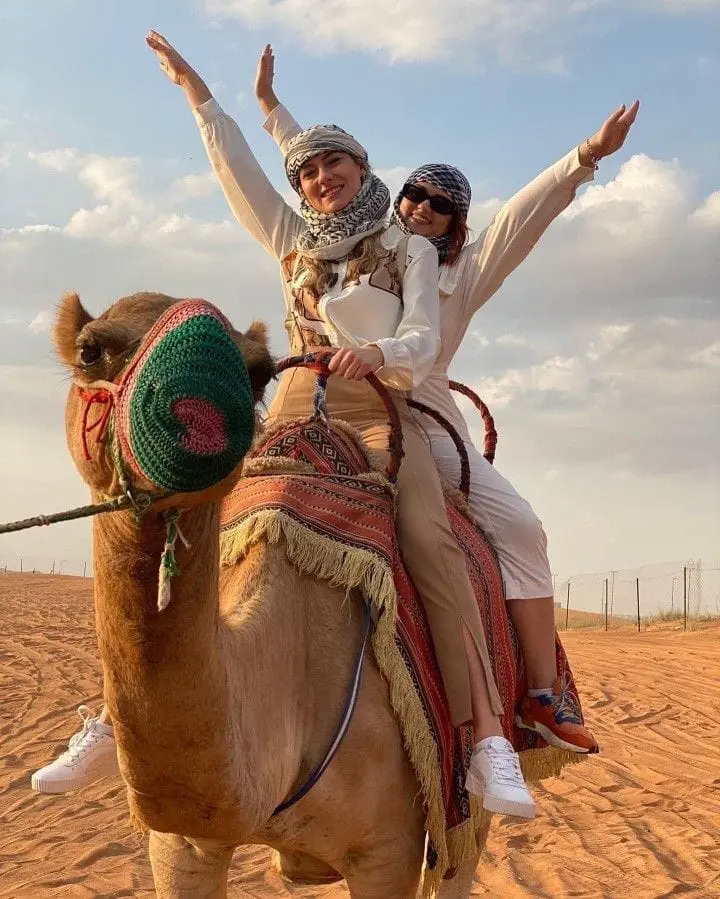
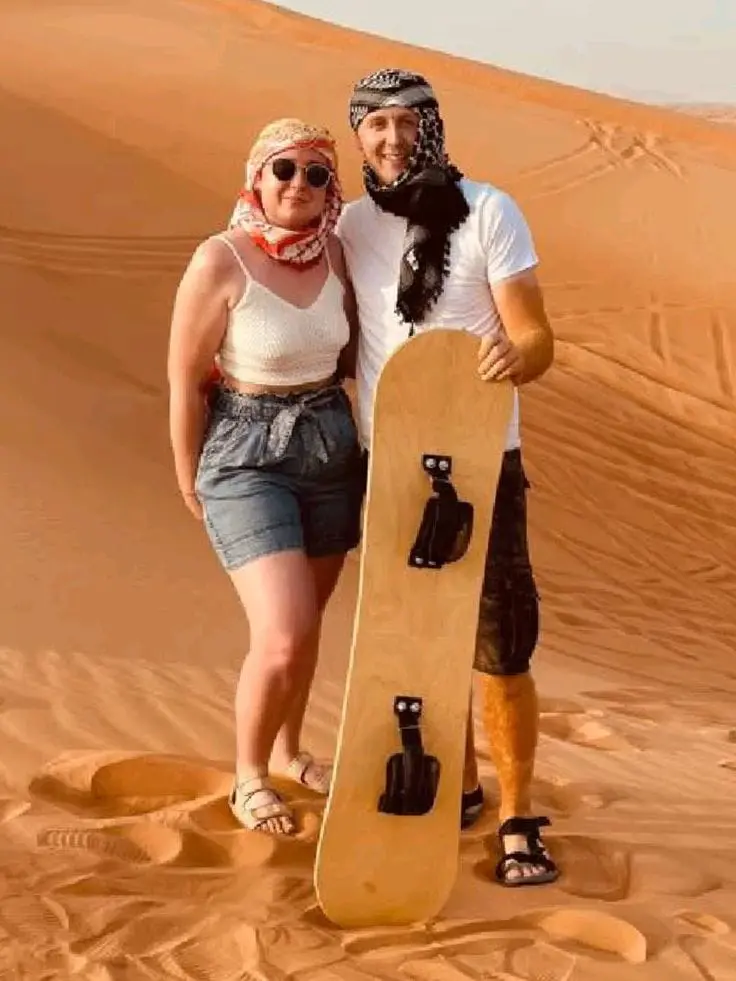
Every ticket includes dune bashing, sandboarding, a short camel ride, the sunset stop, falcon photo opportunity, henna, Arabic coffee and dates, unlimited soft drinks and tea, the live shows and the veg and non-veg BBQ buffet. Pay on arrival, cash or card, no deposit, free cancellation up to 12 hours.
Book Your Night in the Dunes
From USD 10 / AED 35 per person · pickup 2:30–3:30 PM · back by 10:30 PM · pay on arrival.
Hour by Hour: The After-Dark Programme at Our Camp
After sunset the camp changes character: lamps on, coals down, the programme running show by show until vehicles load at about 9:30 PM. The timeline flexes with the season, everything follows the sun.

One detail guests rarely expect: the shows are sequenced for darkness, fire first, dance last, and the gap between sunset and dinner is left free for climbing the dune behind camp. Asked to start the fire show early, we refuse; against a half-lit sky it loses everything.
Why Dune Bashing Happens Before Dark (and Why That Is a Good Thing)
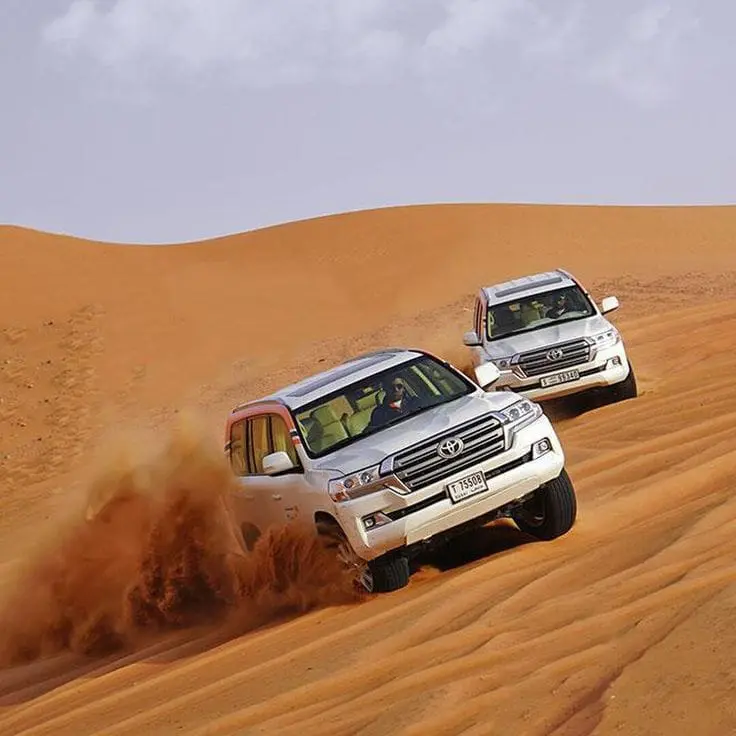
Dune bashing runs in daylight and ends around sunset, no operator in Abu Dhabi drives the big dunes in darkness, and none should. Our drivers read the sand by sight: the ripple patterns, the shadow on a slip face, the crust that says a crest will hold. Headlights flatten all of that into guesswork.
Sand changes daily with wind and humidity; a ridge crossed at speed yesterday can be scooped hollow today, and the warning is visual. So the driving takes the bright, low-angle light of late afternoon, and the after-dark return follows a known flat track, gently.
The honesty carries a bonus: the dunes come before dinner, roller-coaster driving on a full stomach is a combination nobody enjoys. If driving is your main event, read our dune bashing guide and ask about an extra daylight run.
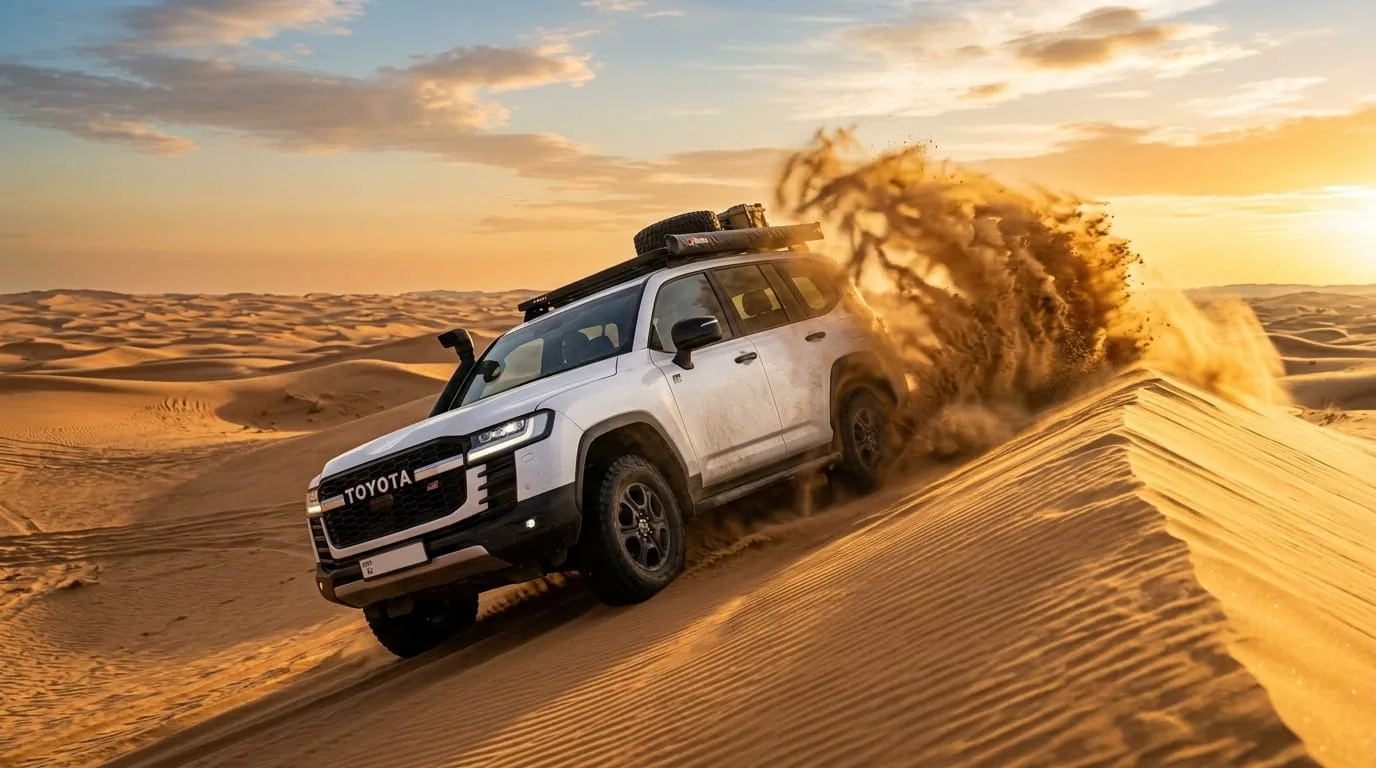
How Dark Does the Desert Really Get at Al Khatim?
Dark enough for serious stargazing. Our camp sits roughly 80 km east of Abu Dhabi’s light dome, and on a clear, moonless night the Milky Way shows to the naked eye once your eyes adjust. You will still notice a faint western glow, the city, but overhead the sky is genuinely black.
We would rather tell the truth than sell a planetarium. The UAE’s certified darkest spot is Al Qua’a, about 125 km and roughly 90 minutes southeast; astronomers go there for a reason. Al Khatim is the practical compromise: 50–60 minutes from town, dunes over 100 metres blocking stray ground light, and skies that reward eyes and cameras without becoming an expedition.
What surprises guests most is the darkness underfoot. Step past the last lamp and night vision opens within minutes: crests appear against the sky, and on a moonless night starlight is enough to walk by. Our Al Khatim desert guide covers the area in daylight.
Stargazing on a Night Safari: What You Can Actually See
On a clear, moonless night expect the Milky Way overhead, the brighter planets when they are up, shooting stars if a shower is running, and more stars than most city dwellers have ever seen. On a full-moon night expect the reverse: few stars, but silver dunes bright enough to walk without a torch.
Three things decide your sky: moon, dust, season. The moon matters most, it gets its own section below. Haze softens the hotter months, while crisp winter evenings produce the sharpest skies: one more reason the cool season is peak desert time, as our best time to visit guide explains.
After the shows, take your tea beyond the lamps and give the sky a few patient minutes; our crew will point you to the darkest edge of camp. For the full deep-sky version, we run dedicated stargazing safaris.
Moon-Phase Planning: Choose the Night Sky You Want
Book within about five days of a new moon for the darkest sky and a naked-eye Milky Way; book near the full moon for silver dunes and easy walking. Both are superb, different nights, and nobody else tells you to check the moon before picking a date.
If your dates are flexible, decide what you want first: photographers chasing the galactic core need the new-moon window; couples usually love the full moon, when the desert becomes a black-and-white photograph you can walk into. Check a moon-phase app, or send your dates on WhatsApp and we will check the moon for you. More detail lives in our Abu Dhabi desert stargazing guide.
Nocturnal Wildlife: What Moves in the Dunes After Dark
Once the sand surface cools after sunset, the desert’s night shift clocks on: Arabian red foxes, gerbils, geckos and, if you are very lucky, the Pharaoh eagle-owl. Straight truth: sightings are a bonus, never a promise; any operator who guarantees wild animals is selling something.
The first hours of darkness are the busiest, exactly your hours at camp. The most reliable show is written, not performed: by morning the sand is stitched with neat fox lines and tiny gerbil hop-prints, the whole story readable at dawn.
Keep torches low and voices lower on the dune walk to raise your odds. Full profiles are in our guide to the animals of the Abu Dhabi desert.
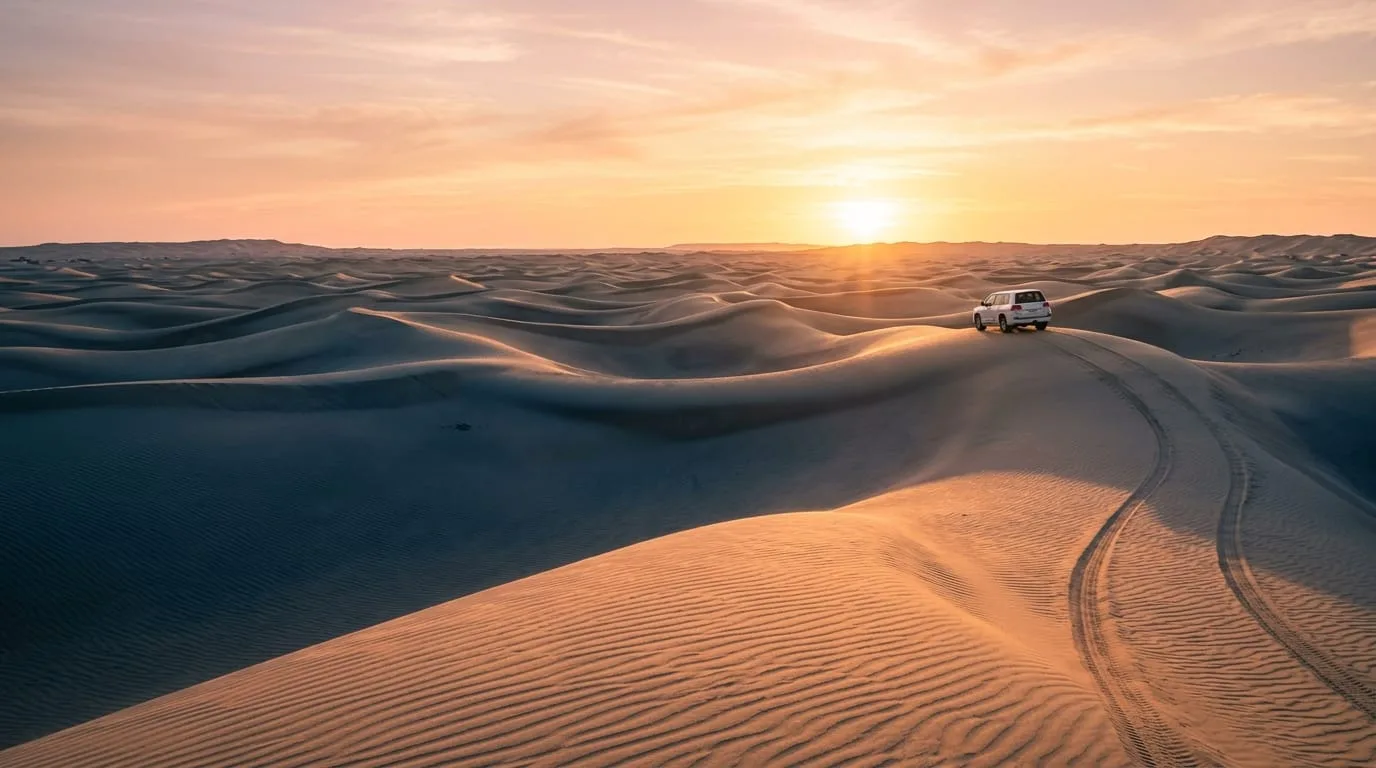
A Night Photography Mini-Guide for the Dunes
One piece of kit brings home genuinely good night photographs: something to hold the camera still, a small tripod, a bean bag, a jacket on a cool bonnet. After that it is settings, and they are simple.
Fieldcraft matters as much as settings: walk beyond the camp lights, our drivers know the dark ridges, and focus manually on a bright star, not autofocus’s guess.
How Cold Does the Desert Get at Night: and What Should You Wear?
The desert cools fast after sunset, dry sand sheds its heat quickly, so even summer evenings turn pleasant late in the programme. In winter, bring a proper jacket: Abu Dhabi city sees January lows around 14°C, and the open desert reads noticeably colder, especially with a breeze over the dunes.
This catches out more guests than anything else: people pack for the 3 PM pickup and forget they will be sitting outdoors at 9 PM. At night even the sand turns cold to the touch.
On your feet, anything that slips off easily wins, the camp carpets are a barefoot zone. The season-by-season packing list is in our what to wear guide.
Who Should Book a Night Safari: and Who Shouldn’t
We would rather match you to the right trip than win the wrong booking.
Still torn? Tell us on WhatsApp who is coming, what you want to see, and your dates, we will say plainly which trip fits, even when it is the cheaper one.
VIP Majlis and Private Night Safaris
Two upgrades change the night. The VIP majlis, +USD 16.35 / AED 60 per person, reserves cushioned low seating with the clearest view of the fire show and stage, worth it on busy winter evenings. Details on the VIP safari page.
Going private changes the rhythm rather than the seats. A private 7-seater is USD 190 / AED 699 per car and a private Land Cruiser USD 218 / AED 800; your group rides alone, the driver paces the dunes to your nerves, and the sunset stop lasts as long as your camera needs. It is the format we recommend for proposals, the dark dune behind camp has hosted a few.
Your own vehicle also means the stargazing stop happens where the sky is best, not where the convoy parks. Comparisons on our private desert safari page.
Why Book the Night Safari With Us
Because the camp is actually ours. Most “night safari” listings resell seats at shared camps they have never operated; we built and run our own in the Al Khatim dunes, which is why we can tell you where the dark ridges are and what the moon will do on your date.
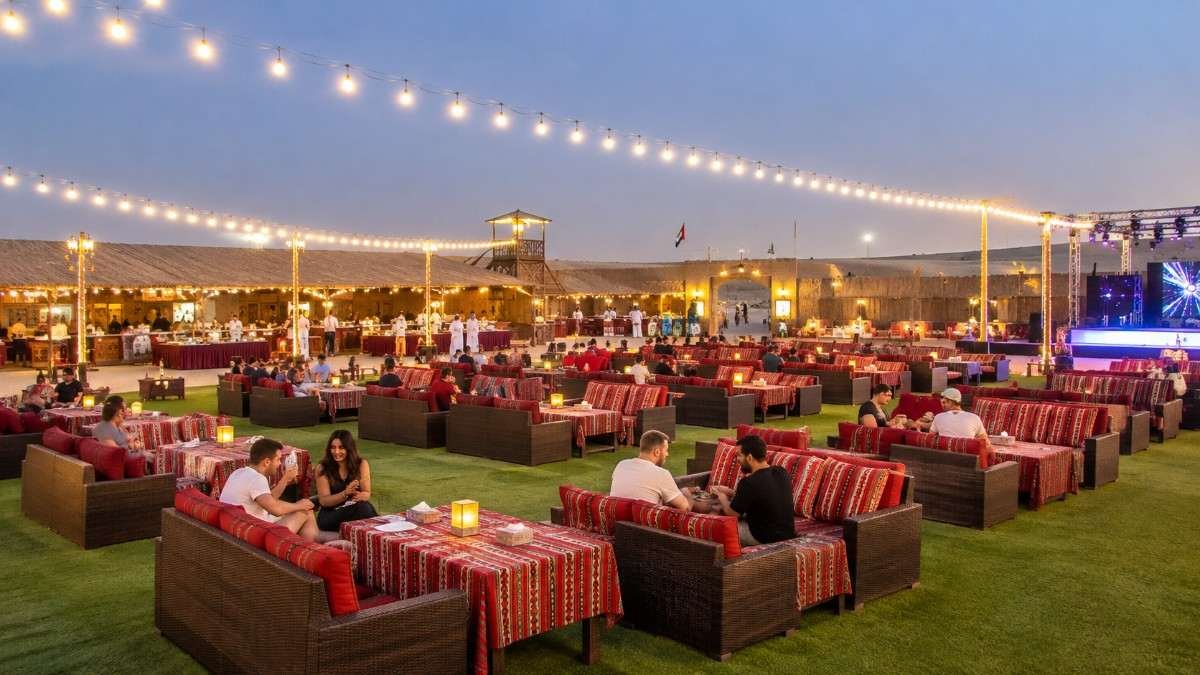
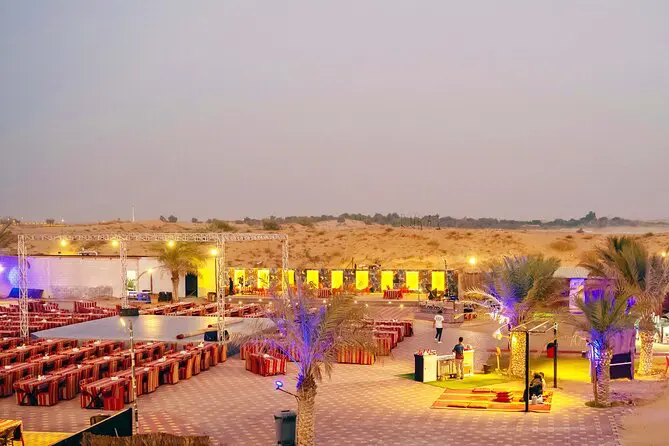
It is built the traditional way, carpets, low seats, coals, lamplight, closer to a true Bedouin majlis than a floodlit arena. You notice the moment the shows end and the silence takes over.
A Licensed Operator, Not a Reseller
Royal Arabian Safari Tourism LLC is a DCT Abu Dhabi licensed tour operator, office at Al Sila Tower, Al Maryah Island, with its own private camp in the Al Khatim desert. More than a decade of desert nights, over 5,000 guests hosted, and a 4.9★ Google rating. Pay on arrival, cash or card, no deposit, no booking fee, free cancellation up to 12 hours before.
The Desert Is Better After Dark
From USD 10 / AED 35 per person shared · USD 190 / AED 699 private 7-seater · USD 218 / AED 800 private Land Cruiser. Tell us your date; we will tell you the moon phase.
Night Desert Safari Abu Dhabi: Frequently Asked Questions
What is a night desert safari in Abu Dhabi?
It is the evening safari experienced through to full darkness: afternoon pickup, dune bashing and sunset in daylight, then dinner, fire show, Tanoura, belly dance, shisha and stargazing after dark, returning about 10:00–10:30 PM. There is no separate night-only departure, darkness is the safari’s second half.
Is the night safari the same as the evening desert safari?
Yes, same product, same price, same camp. “Evening”, “sunset”, “night” and “Arabian nights” safari are marketing names for one trip whose second half runs after dark. The only genuinely different product is the overnight safari, where you sleep at camp and return next morning.
Does the night desert safari start at 3 AM or 3 PM?
3 PM, mid-afternoon, never 3 AM. Pickup runs 2:30–3:30 PM, sunset is watched from the dunes, the after-dark programme follows at camp, and drop-off is about 10:00–10:30 PM the same night. Listings printing “3:00” without AM or PM cause the confusion.
What is the difference between a night safari and an overnight safari?
The night (evening) safari returns you to Abu Dhabi at 10:00–10:30 PM. The overnight includes everything the evening does, then you sleep at our camp, catch the late sky and sunrise, and return after breakfast. If you searched “desert safari night stay”, you want the overnight.
How much does the night desert safari cost?
From USD 10 / AED 35 per person self-drive, USD 16.35 / AED 60 with mall bus pickup, and USD 41 / AED 150 with hotel pickup. VIP majlis is +USD 16.35 / AED 60 per person; a private 7-seater is USD 190 / AED 699 and a private Land Cruiser USD 245 / AED 899. All tiers include dinner, shows and activities; pay on arrival.
Can you see the Milky Way on a night safari?
Yes, on a clear night within about five days of the new moon, the Milky Way shows to the naked eye from the dark sand beyond our lamps. Near full moon it vanishes into moonlight, so time your date to the lunar calendar.
What is the best moon phase to book?
For stars, book within roughly five days of a new moon, when the sky is fully dark. For silver, walkable dunes, book near the full moon. A quarter moon, about one-sixth of full brightness, is a fair compromise. Send your dates on WhatsApp and we will check the moon.
Which animals come out in the desert at night?
Once the sand cools: Arabian red foxes, Rüppell’s foxes, desert hedgehogs, Cheesman’s gerbils, geckos and occasionally a sand boa, with the Pharaoh eagle-owl hunting silently overhead. Sightings are a bonus, not a promise, the reliable evidence is the fresh tracks covering the sand by morning.
Is dune bashing done in the dark?
No. Drivers read dune shape and shadow by eye, which headlights cannot replace, so driving runs in late-afternoon light and ends around sunset; after dark, vehicles use a known flat track. It also puts the dunes before dinner, your stomach will approve.
Is the desert cold at night?
It cools quickly once the sun sets, because dry sand sheds heat fast. Summer evenings turn pleasantly mild by the time the shows end; winter nights need a jacket, the city sees January lows around 14°C and the open desert feels colder. One warm layer covers every month.
What should I wear for a night desert safari?
Light, loose clothing for the hot afternoon start, shoes you can shake sand from, and one warm layer for after sunset, a jumper in warm months, a proper jacket and scarf in winter. Nothing you would mourn losing to sand. The seasonal packing list is on our what-to-wear guide.
Is the desert safe at night?
Yes. You are at a private, staffed camp with our own team, vehicles and lighting, not wandering open desert. Dune driving stops at sunset, the return follows a known track, and you stay within sight of the lamps unless a guide walks with you.
What is for dinner: and are there vegetarian options?
A BBQ buffet from about 7:30–8:00 PM with a full vegetarian line alongside the grills, salads, breads, dessert, plus unlimited soft drinks, water and tea, and Arabic coffee with dates at sunset. Tell us about allergies or vegan and Jain needs when booking; the kitchen prepares accordingly.
Can children join the night safari?
Yes, evenings are the desert’s most family-friendly hours: cool sand to run on, shows children adore, and a return by 10:00–10:30 PM that suits school-age kids. For very young children we can soften the dune driving, or take the private car so the pace bends to you.
The Desert Doesn’t End at Sunset
Every desert safari watches the sunset; our Abu Dhabi night desert safari stays for what comes after, coals and lamplight, fire against a black sky, a silence you can hear between the shows. Pickup 2:30–3:30 PM, home by 10:30 PM, from USD 10 / AED 35 per person at our own private camp. Time your night to the moon and it will outshine everything else on your itinerary.
Keep planning with our first-time desert safari guide and the complete price guide, then send your date on WhatsApp and we will hold your evening.
Continue Planning Your Trip
- Camping in Abu Dhabi, Spots, Rules & Overnight Options
- Fossil Dunes Abu Dhabi, Al Wathba Visitor Guide & Closure Update
- Abu Dhabi Sand Dunes, Where to Find Them & How Tall They Get
- UAE Desert Guide, Dunes, Wildlife & Where to Go
- Liwa Overnight Desert Safari, A Night in the Empty Quarter
- Desert Safari Abu Dhabi Night Temperature
- Abu Dhabi Desert Safari Prices
- What to Wear on a Desert Safari in Abu Dhabi
- Best Time for a Desert Safari in Abu Dhabi
- Desert Safari Packages Abu Dhabi
- Abu Dhabi Desert Safari Booking, Confirmed in Minutes
- Morning Desert Safari Abu Dhabi
Book this tour
No deposit and no card details. Message us and we confirm the plan and the exact price before you commit, answered at any hour.
- Send your date and guest countYour date, how many of you, and where we collect from. That is all we need.
- We send the plan and the pricePer car, not per person. You see the route, the timings and the exact figure first.
- Pay the driver on the dayCash or card, after the run. Free cancellation up to 12 hours before pickup.
Answered 24 hours · No deposit · No booking fee · Licensed operator
If we have to cancel, what happens?
A cancellation policy that covers your obligations but not ours is only half a document. Here is our side of it, in writing.
If we have to cancel your booking, for weather, a vehicle issue, or driver illness, we will contact you as soon as we know and rebook you at no charge on the next date that works for you. You pay nothing for the cancelled booking.
If we need to send a different vehicle than the one you booked, we will ask you first rather than turning up in something you did not book.
This is separate from your own cancellation rights, which are unchanged: you can cancel free up to 12 hours before pickup. Because we take no deposit and no booking fee, there is no money of yours sitting with us either way: nothing to chase, and nothing to wait for.


- 4.9from 10,000+ reviews
- 95,000+guests since 2015
- LicensedDCT Abu Dhabi, DTCM Dubai
- No depositpay on the day